





By using this site, you agree to the Privacy Policy and Terms of Use.
Accept
Afield DailyAfield Daily
  • Home
  • Hunting
  • Fishing
  • Cooking
  • Camping
  • Gear
  • Videos
Search
More Topics
  • Outdoor
  • Conservation
  • Survival
 
  • Guns
  • Gear Review
  • ATVs
Quick Links
  • Community
  • Customize Interests
  • Bookmarks
  • Privacy
  • Terms
  • Press Release
  • Advertise
  • Contact
© 2023 Afield Daily. All Rights Reserved.
Reading: Researchers Investigate “Exceedingly Rare” Sabertooth Cat Skull Found in Iowa
Sign In
Notification Show More
Latest News
It’s OK to Keep Trophy Crappie
Fishing
GALLERY: Team Knighten Industries sweeps the board at Builders FirstSource Qualifier Match 3
Fishing
The Best Tactical Flashlights of 2024
Gear
FantasyFishing.com Insider: Everything you need to know about Kentucky Lake
Fishing
Man Fined After Illegally Stashing 1,000 Pounds of Shed Antlers
Conservation
Aa
Afield DailyAfield Daily
Aa
  • Camping
  • Hunting
  • Fishing
  • Cooking
  • Gear
  • Survival
  • Conservation
  • Videos
Search
  • Home
  • Videos
  • Sections
    • Hunting
    • Fishing
    • Cooking
    • Camping
    • Gear
    • Survival
    • Conservation
  • Quick Links
    • Community
    • Customize Interests
    • Bookmarks
Have an existing account? Sign In
Follow US
  • HUNTING
  • FISHING
  • COOKING
  • SURVIVAL
  • VIDEOSHOT
© 2023 Afield Daily. All Rights Reserved.
Conservation

Researchers Investigate “Exceedingly Rare” Sabertooth Cat Skull Found in Iowa

Afield Daily
Last updated: 2023/04/04 at 9:43 PM
Afield Daily

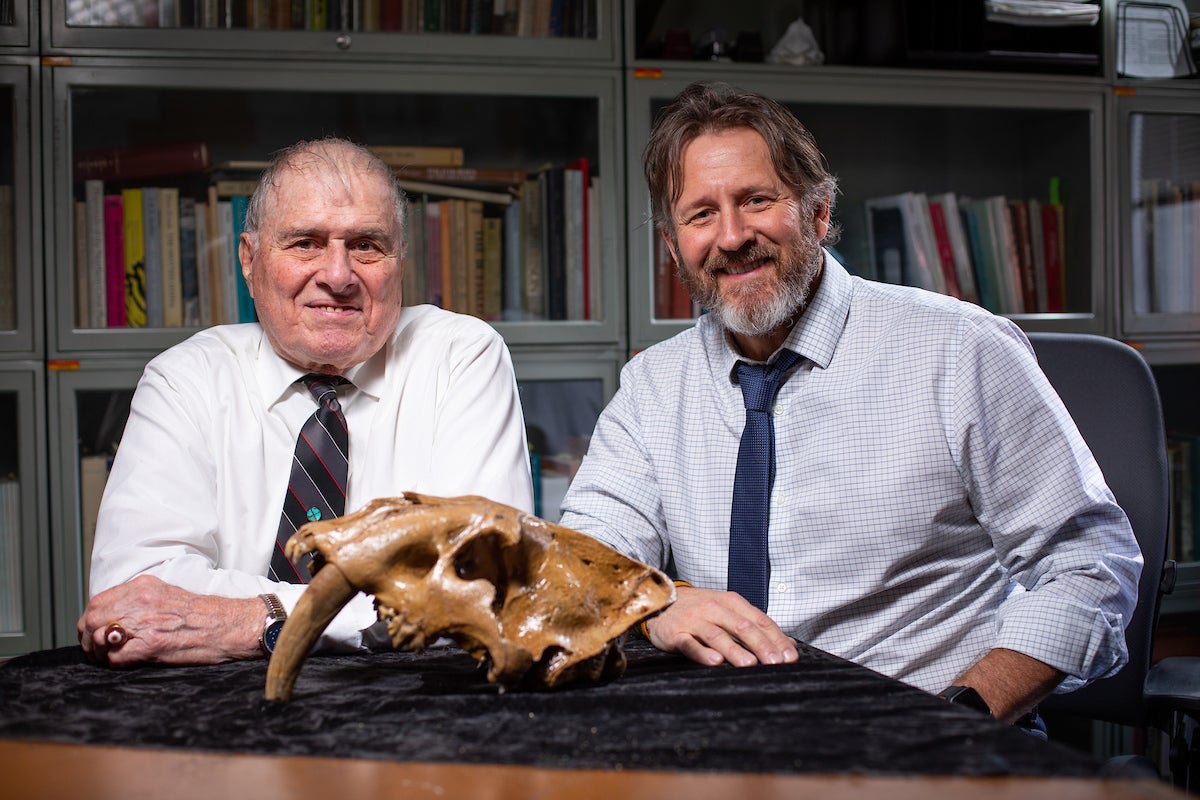
A remarkably well-preserved skull found in southwest Iowa may have belonged to one of the last sabertooth cats to prowl the earth. The big predators that once ranged widely across North and South America are thought to have become extinct at the end of the Ice Age, roughly 12,000 to 13,000 years ago. Recent radiocarbon dating suggests that the Iowa cat—most likely a sub-adult male—died between 13,605 and 13,460 years ago, according to newly published research in Quarternary Science Reviews.  

Only around 70 sabertooth skulls have ever been found in the United States, and they are extremely rare outside of Southern California, where one of the world’s largest collections of sabertooth bones was found at the La Brea Tar Pits. This is the first specimen discovered in Iowa.

“The skull is a really big deal,” Matthew Hill, associate professor of anthropology at Iowa State University, said in a statement. “Finds of this animal are widely scattered and usually represented by an isolated tooth or bone. This skull from the East Nishnabotna River is in near-perfect condition. It’s exquisite…To have a complete skull like this is exceedingly rare. It’s like finding a needle in a stack of needles.”

Hill conducted the dating of the skull in collaboration with David Esterla, professor emeritus of biology at Northwest Missouri State University. In a video, he noted that the presence of unworn adult teeth and cranial sutures (joints that connect the plates of the skull) indicate that the cat was still growing when it died. “As a sub-adult male, it was already larger than the same animal in California,”  Hill said. Researchers estimate the 2- to 3-year-old predator weighed about 550 pounds.

Read Next: Researchers Discover 2,000-Year-Old Instruments Made out of Deer Antlers

Sabertooth cats had short tails, a heavy, muscular build, and the distinctive long canine teeth of their namesake. The Iowa skull found in Page County, Iowa features one intact canine and one stub. The broken fang—which shows evidence of having been damaged shortly before the animal died—could mean that the cat was seriously injured while attacking prey and survived for only a short time afterward. Hill believes sabertooth cats were one of the few predators equipped with the “absolutely lethal jaws and claws” necessary to take down the giant ground sloth, a now-extinct 20-foot-long sloth species that was estimated to weigh between three and six tons. Sabertooth cats also lived among the dire wolf, stag-moose, muskox, giant short-face bears, bison, and mammoth.

Working with a colleague who is an expert in dietary reconstruction using bone geochemistry, Hill plans to determine which of those species this particular cat might have preyed on. “You are what you eat,” he explained. “And it’s locked in your bones.”


Read the full article here

[ruby_static_newsletter]
Leave a comment

Leave a Reply Cancel reply

Your email address will not be published. Required fields are marked *

You Might also Like

Conservation

Man Fined After Illegally Stashing 1,000 Pounds of Shed Antlers

5 Min Read
Conservation

First Grizzly Bear in Bighorn Mountains in a Century Euthanized for Predation

4 Min Read
Conservation

Idaho Man Busted with More Than 1,000 Pounds of Poached Shed Antlers

5 Min Read
Conservation

As Wolf Management Debate Reaches a Fever Pitch, the Interior Department Hires a National Mediator

22 Min Read
Conservation

Wardens Seek Information About Elk Poaching Spree in Idaho

2 Min Read
Conservation

Florida Now Using Gambling Revenues to Fund Conservation

4 Min Read
Conservation

Wildlife Commissioner Fined For Hunting Turkeys Baited with Crickets

2 Min Read
Conservation

Louisiana Approves Black Bearing Hunting Season for 2024

3 Min Read
//

Afield Daily is your one-stop news website for the latest articles and tips about hunting, fishing and camping, follow us now to get the content you want.

Quick Link

  • PRIVACY POLICY
  • TERMS OF USE
  • PRESS RELEASE
  • ADVERTISE
  • CONTACT

Hot Topics

  • HUNTING
  • FISHING
  • COOKING
  • SURVIVAL
  • VIDEOSHOT

Sign Up for Our Newsletter

Subscribe to our newsletter to get our newest articles instantly!

[mc4wp_form]

Afield DailyAfield Daily
Follow US

© 2023 Afield Daily. All Rights Reserved.

Join Us!

Subscribe to our newsletter and never miss our latest articles, podcasts etc..

[mc4wp_form]
Zero spam, Unsubscribe at any time.

Removed from reading list

Undo
Welcome Back!

Sign in to your account

Lost your password?