




The House Natural Resources Committee earlier this month heard the opening notes of what is likely to be the main chorus of federal conservation funding for the year, the $320 million America’s Wildlife Habitat Conservation Act.
The hearing framed both the ambition and the limitations of the bill, which was authored and introduced by the chairman of the committee, Rep. Bruce Westerman (R-Ark.). The legislation would funnel federal money — as much as $320 million annually — to state and tribal wildlife agencies to do the hard work of improving habitat to keep wildlife off the endangered species list.
The bill’s goals have been sought by conservationists for at least a generation — to dedicate funding to species like bumblebees and salamanders that, for just as long, have either limped along without active management, or have become sudden beneficiaries of huge amounts of emergency federal funding once their populations slip to code-red levels.
The high-water mark of this effort, until now, has been the Recovering America’s Wildlife Act, a $1.4 billion bill that would have poured federal funds into state-agency non-game programs. RAWA passed the House before failing in the Senate last year. The bill expired at the end of the last Congress, the victim of disagreements and uncertainty about how it would have been funded.
Both RAWA and AWHCA intend to pay for non-game wildlife conservation in America by directing federal funds to state and tribal wildlife action plans. These are the congressionally-approved conservation blueprints — and in many cases, unfunded mandates — that direct state-agency resources to take invertebrates as seriously as bull elk, or to give butterflies the same conservation standing as buck deer.
Read Next: The Best Turkey Calls of 2024
But there are some significant differences between last session’s RAWA and this year’s America’s Wildlife Habitat Conservation Act, and Westerman is all too happy to point them out. First is a funding mechanism in his bill that conforms to the spending priorities of the fiscally conservative leadership of this Congress. The $320 million annual price tag for AWHCA would come from unspent federal Inflation Reduction Act funds that would have to be approved by the House Appropriations Committee. And there’s a 5-year sunset provision to Westerman’s bill, meaning that proponents would have to return to Congress in five years to seek another round of funding.
“My bill is like the Farm Bill, where Congress can come back after years and see what’s working and what’s not working as lawmakers consider whether to reauthorize the funding,” says Westerman. “I like a lot of the ideas of RAWA, and you’ll find many of them in my bill. But RAWA was a mandatory appropriation, which is the sort of spending that’s running up the debt in this country. With my fiscally achievable bill, you can look at it every year to see if it’s effective, and increase or decrease funding appropriately. You have to do a lot more work to stay on top of these programs, but I think the conservation benefit is higher” because of the requirement to justify further investment.
Like RAWA, federal funds would be directed to state agencies to both ensure that abundant wildlife remains abundant and to do important habitat work to recover species that are sliding toward federal protection. Spending federal funds proactively on habitat is smarter than spending just as much or more on recovery once species are listed as threatened or endangered, says Westerman.
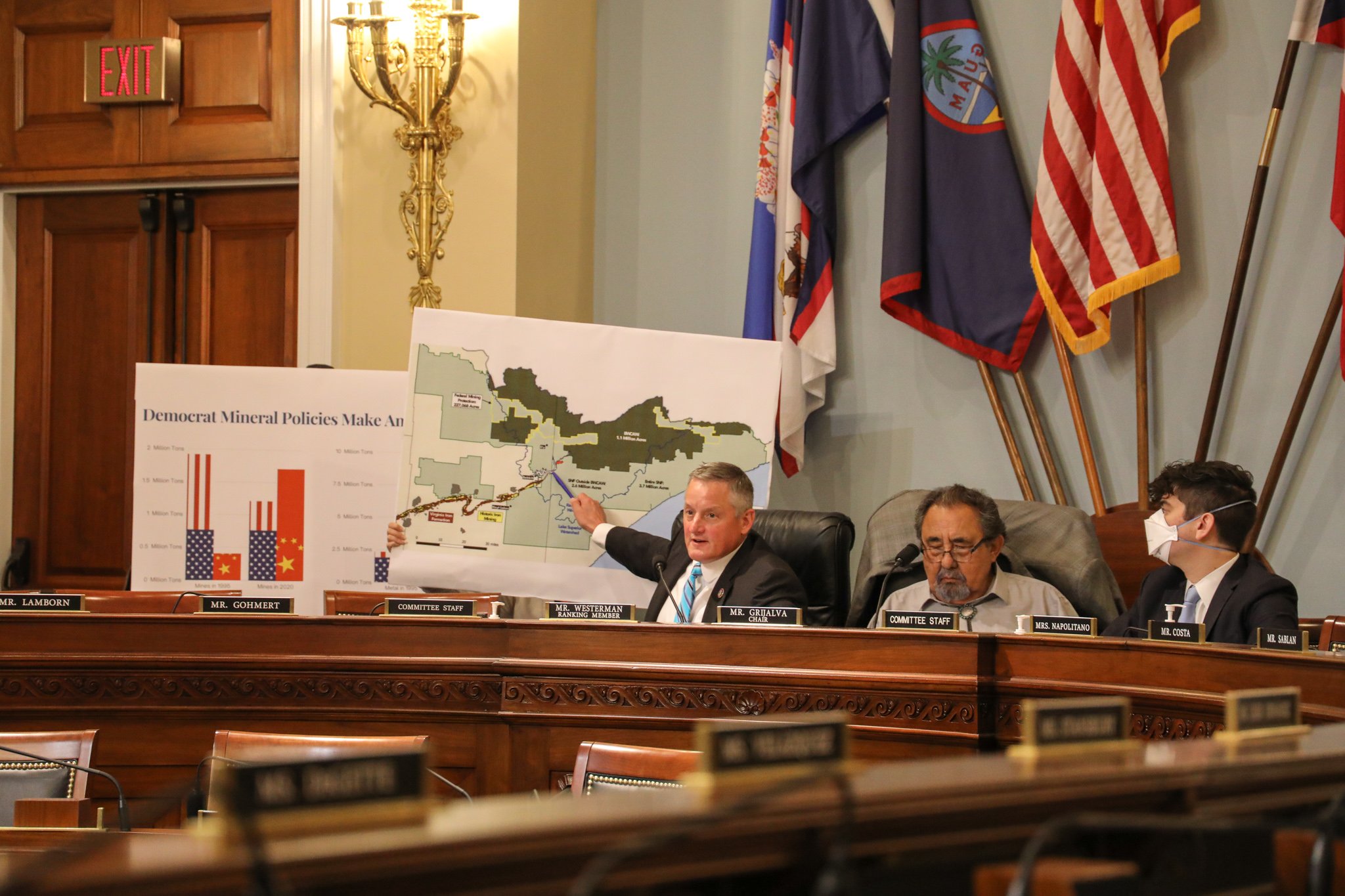
When conservation advocates suggest to Westerman that his bill needs an acronym that slides off the tongue like RAWA does, the Congressman bristles. The title is clunky, he acknowledges, but it accurately describes its ambition.
“I don’t know what Recovering America’s Wildlife really means, but I know exactly what Wildlife Habitat Conservation is,” he says. “The focus on my bill is to hone down to where the rubber meets the road, to do the hard and necessary work on habitat, which is in need of management on our federal lands and on our private lands.”
Westerman, the only certified forester in Congress, stresses that one of the most important provisions of his bill is to promote more active habitat work on National Forests, National Wildlife Refuges, and on private land. The mechanism for that work is extending what’s called Good Neighbor Authority for the U.S. Fish and Wildlife Service, allowing that agency to partner with states, tribes, counties, and private landownersto do active management, from timber-thinning projects to create more mosaic habitats, or prescriptive fires to rejuvenate vegetation.

The bill would require federal agencies to establish “objective, incremental” recovery goals for listed species, and then provide an “off-ramp” for states to manage listed species as recovery goals for the species are met. The AWHCA also contains a fix to the controversial “Cottonwood decision” that has stopped or delayed dozens of habitat projects on federal Forest Service land.
While a number of proponents at this month’s hearing stressed the benefits that Westerman’s bill would provide, the legislation has plenty of critics. They include lawmakers who authored and rallied for RAWA last session.
“This bill does not address the biodiversity crisis with the resources, urgency, or funding it requires,” testified Debbie Dingell (D-Mich.), one of the many co-sponsors of RAWA.
Other critics claim that the funding mechanism for AWHCA amounts to a sort of double jeopardy for conservation, since its funds were appropriated by Congress as part of the Covid-era Inflation Reduction Act. Unspent IRA funds might be available now, but the chances that they will be available when AWHCA sunsets in five years are slim. Given that large-scale habitat work often takes a couple of years to get on plane, say critics, having inconsistent funding could short-stop some projects before they can achieve landscape-scale benefits.
But Westerman is undeterred.

“We’re not getting the habitat work we need to do on our federal lands,” he says, “but if you look at most states around the country, through their state wildlife action plans, they’re doing good work on state and private lands. We’d like to extend that work to federal lands, and there’s a good model for this in my home state, Arkansas’s 4th Congressional District. The red-cockaded woodpecker is native to the region, but overgrown pine forests have crowded out the bird [that likes spacious understories in mature forests].
“The Ouachita National Forest initiated a large-scale habitat restoration project to benefit the woodpecker. Thinning opened up the forest, let the light in, and they conducted prescribed burns that prompted the growth of a seed stock that hadn’t been activated in a hundred years,” says Westerman. “It created classic red-cockaded woodpecker habitat, and the birds responded, but so did our native bobwhite quail, and wild turkeys, and deer, and other songbirds. Now, they’re trapping woodpeckers in the project area to release elsewhere. Timber receipts from the project paid for the work. That’s the sort of project I hope we can fund with what I look at as seed money from my bill, not only on federal land, but on private lands, as well.
Read Next: Auction vs. Raffle Tags: Should States Stop Selling Big-Game Tags to the Highest Bidder?
“In my home state of Arkansas, under the RAWA formula, the [Game and Fish Commission] would get $13 to 14 million a year,” says Westerman. “Under the Habitat Conservation Act they would get $3 to $4 million per year. But there’s potential to generate two to three times more funding than what they would get through RAWA funding, if they utilize this ability and manage on federal lands and return the timber receipts back into the fund.”
The America’s Wildlife Habitat Conservation Act is scheduled to be the subject of a House Natural Resources Committee “mark-up” session, in which amendments are offered and voted on, either the first or second week of April. The amended bill would then go to the House Appropriations Committee, then on to the House floor for a vote, and if it passes there, be referred to the Senate.
Read the full article here