




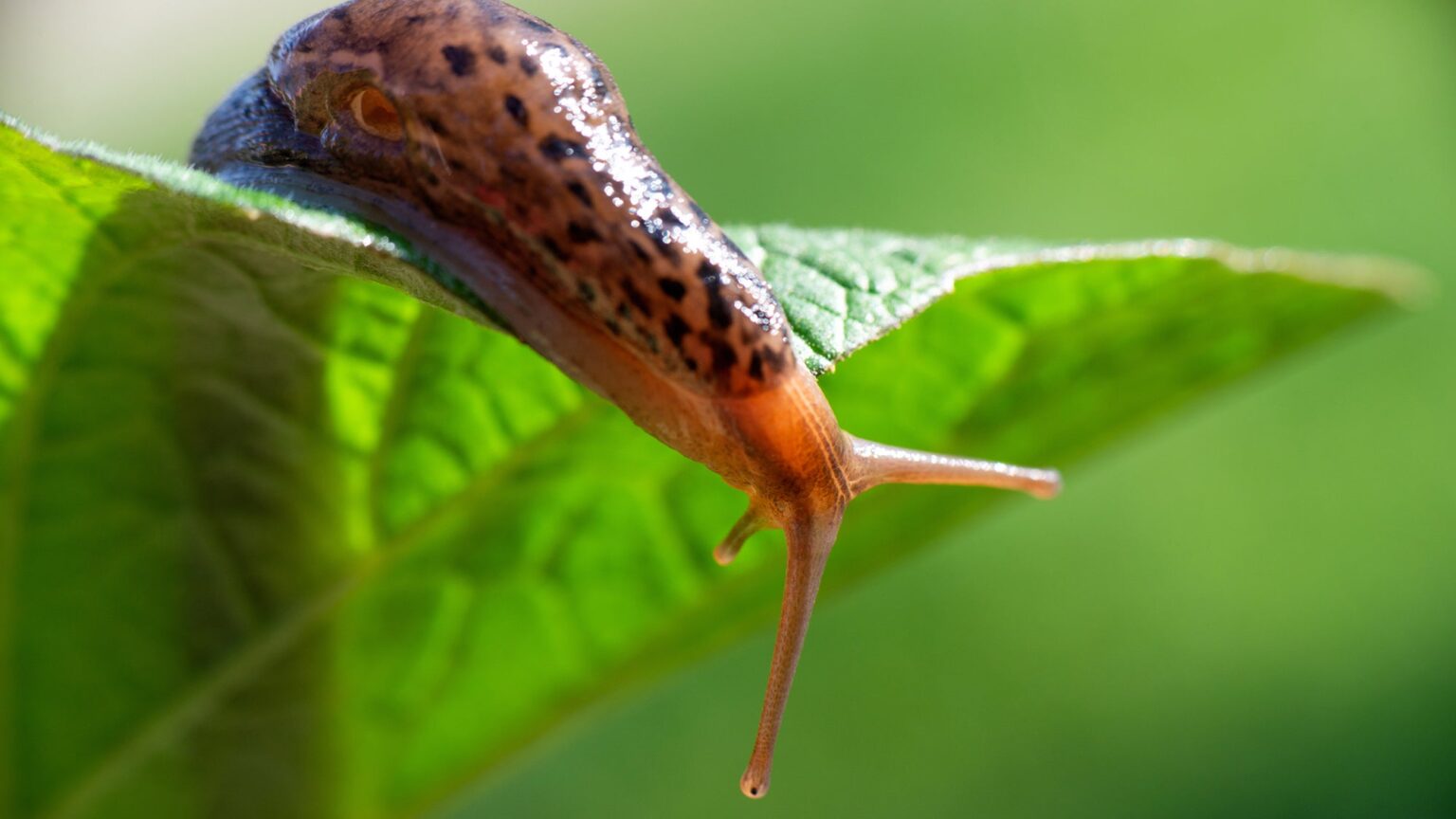

You’ve seen them oozing over the leaf litter in the woods. On the vegetation along your favorite stream. Consuming the greens in your garden. With their retractable eye stalks. Their plump gelatinous bods. And their single foot that leaves a signature of slime. That’s right, slugs. Those omnipresent land mollusks. Those hermaphroditic gastropods. The composters who play a critical, however hidden, role in maintaining a balance in the hunting and fishing grounds we wander. So, what do slugs eat to strike that balance? We’ve got your answer.
What Slugs Eat: Key Points
- The 40 species of slugs in North America can be omnivorous, herbivorous, carnivorous, or detritivorous. Some specialize, while others are generalists.
- Carnivorous slugs eat worms, snails, and other slugs.
- Herbivorous slugs eat flowers, vegetables, herbs, wild mushrooms, and a wide variety of shoots and young plants.
- Omnivorous and detritivorous slugs eat carrion, feces, and decaying plant materials, such as leaf litter.
Table of Contents
- What Are Slugs?
- Slugs Versus Snails
- Garden Pests
- What Slugs Eat in the Wild
- Nature’s Composters
- How Slugs Eat?
- What Eats Slugs?
Slugs vs Snails
Slugs are essentially snails without shells, terrestrial cousins of clams and oysters. They are gastropods, slime-producing mollusks that carry their stomachs inside their single “foot,” which is also their mode of transportation. Legless and soft-bodied, they are invertebrates with two pair of antennae protruding from their heads, the longer upper ones featuring their eyes at the tips, and the lower ones used for tasting and feeling. They can be gray, brown, reddish, yellow, or tan.
Forty different species of slugs, most of them invasive and most nocturnal, ply the damp, shady realms of North America’s leafy habitats. While they live in areas across the continent, they especially abound in the moist environs of the Pacific Northwest, where the largest species, the banana slug, resides. Slugs range in size from a 1/4 inch to a whopping 8 inches (the banana). Since the ooze they produce helps them to move along plants and detritus, they leave a telltale trail wherever they roam.
The main way slugs differ from snails is in their sluggishness (they tend to be slightly slower) and their shelllessness (though one slug species does have a partial outer shell and a few have inner shells). Slugs are mostly nocturnal, while snails feed 24-7. And slugs prefer damp, cool environs, often remaining underground or buried under logs, rocks, and leaf litter.
What Do Slug Eat in Lawn and Gardens?
For many gardeners, slugs are hated pests. In flower gardens, the creeping bane will target:
- Hostas
- Delphiniums
- Dahlias
- Lupins
- Gerberas
- Violets
- Ageratum
- Lilies
- Heucheras
- Zinnias
- Chrysanthemums
- Marigolds
- Cleome
- Sweet peas
- Tulips
In the vegetable garden, they’ll especially go for:
- Lettuce
- Kohlrabi
- Peas
- Basil
- Brussel sprouts
- Cauliflower
- Beans
- Cabbage
They’ll also devour young tomato, celery, and cucumber plants, before the plants grow tough skins, hairs, or thorns to deter them.
Some slugs are predominantly frugivores and tend to favor ripe fruit such as:
- Strawberries
- Grapes
- Raspberries
- Cherries
- Apples
Slugs can eat many times their body weight in one night. So, a herd or cornucopia of slugs (as they are collectively called) can make a smorgasbord of your garden if not kept in check. Since they do their work at night, look for their trails of slime and raggedy holes on the leaves or flowers of your plants to determine if you’ve got a slug problem.
What Do Slugs Eat in the Wild?
Slugs primarily feed at night in the wild, too, though they’ll also venture out after rain or during foggy or overcast weather. Different species of slugs eat different foods. While some are carnivorous, typically targeting worms, snails, and other slugs, others are herbivorous, specializing in fungi and the young shoots of wild forbs, sedges, and other plants. Most, though, are omnivorous and detritivorous, devouring whatever items they can find in an already partially decayed state.
Slugs Are Natures Composters
As such, slugs play an important role in balancing the ecosystems in which they live. Since they eat a variety of rotting animal and plant life, including decaying leaves, carrion, and feces, they are nature’s decomposers, adding fertility to the soil.
How Slugs Eat
Slugs use their tentacles, which contain primitive eyes and harbor their senses of smell, taste, and touch, to locate and identify food. They also follow their previously laid slime trails to return to bountiful pastures. Once they’ve located a meal, they ingest it through a specialized mouth, near the front end of their foot. They cut off pieces of food with their jaws, then rasp it over their radula, a flexible mouthpiece that has thousands of microscopic teeth.
What Eats Slugs
Slugs are also on the menu for many other animals. While their slimy coatings deter some would-be-predators, raccoons, opossums, snakes, moles, toads, shrews, turtles, ground beetles, and birds, such as ducks, starlings, and thrushes, devour them with gusto. Sciomyzid flies and nematodes also parasitize slugs, and, as mentioned above, some slug species eat other slug species.
Read the full article here