


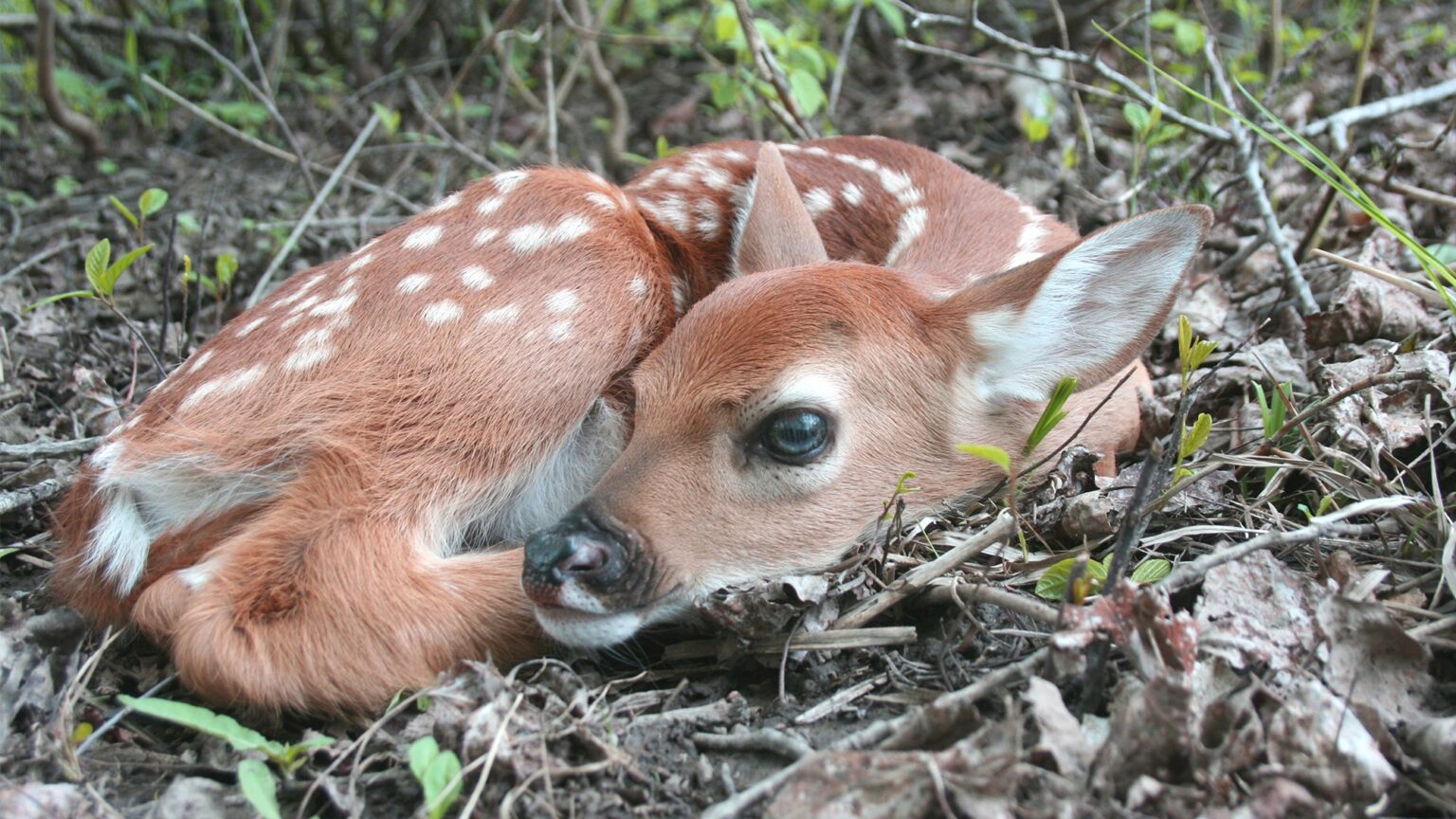

I received a first-hand tutorial in whitetail deer gestation period just the other day. While hunting for morel mushrooms, I stumbled on a tiny fawn curled up in the downed top of an oak tree. I’ve found several fawns over the years as I roam the May woods on the hunt for turkeys or mushrooms, and each one strikes me as miraculous.
This fawn, likely only a day or two old, was perfectly still—I had to wait patiently to see its chest heave a small breath– as I took a few quick photos. Like a child thinking they couldn’t be seen if their eyes remained shut, the fawn never blinked. Perhaps even more amazing, my retriever Cooper, a 3-year old golden that doesn’t miss much and has a tremendous nose, was trolling through the area and never had a clue the fawn was there, despite being within 20 yards at least twice. Though the early life of a fawn is certainly precarious, this one had clearly gotten off to a good start.
I walked off after a minute or two, committing the date of my find to memory. By back-dating from this encounter, I could tell almost to the day when this little deer was conceived. Which explains why knowing a little about deer gestation period is so important to hunters and managers.
Deer Gestation Period and the Rut
Whitetails have a gestation period of about 200 days, or approximately seven months. Using this information, I could back-date the fawn to get an idea of when its mother was bred. I found the fawn on May 20th, and I believed it was only a day or two old, which means the fawn’s mama was successfully bred around November 1, 2022. This was a minor surprise to me; while well within the understood peak breeding dates in Minnesota (which run from late October through late November) the doe was bred quite early in the cycle. This is great information as I prepare for this fall’s hunting season; while I always focus plenty of effort on the last week of October, I’ll know that, on this farm at least, the action then might lean more toward peak breeding, rather than late pre-rut.
More generally speaking, knowing the gestation period for deer helps dispel myths about annual rut timing. By studying the development of the fetuses of does killed in late winter or in spring and back-dating based on deer gestation period, biologist have long since confirmed that in the northern part of the country, the whitetail rut happens at roughly the same time year after year—from early to mid-November—based on photoperiod. Warm weather does not delay the rut any more than a certain moon phase kicks it into gear. And this is not a guess. It’s a fact backed up by measured fetus development and the known gestation period for deer.
Deer Gestation and Fawn Survival
It’s all built around survival of a the species. In the north, where harsh winter weather poses a mortal threat, the timing of the fawn drop is critical, and evolution has seen to it that in a healthy deer herd, fawns will drop when their chances of survival are highest, year after year. This also explains why the fawn drop, and therefore the rut, is much more spread out in the South, where the absence of harsh winters allows much more leeway for survival.
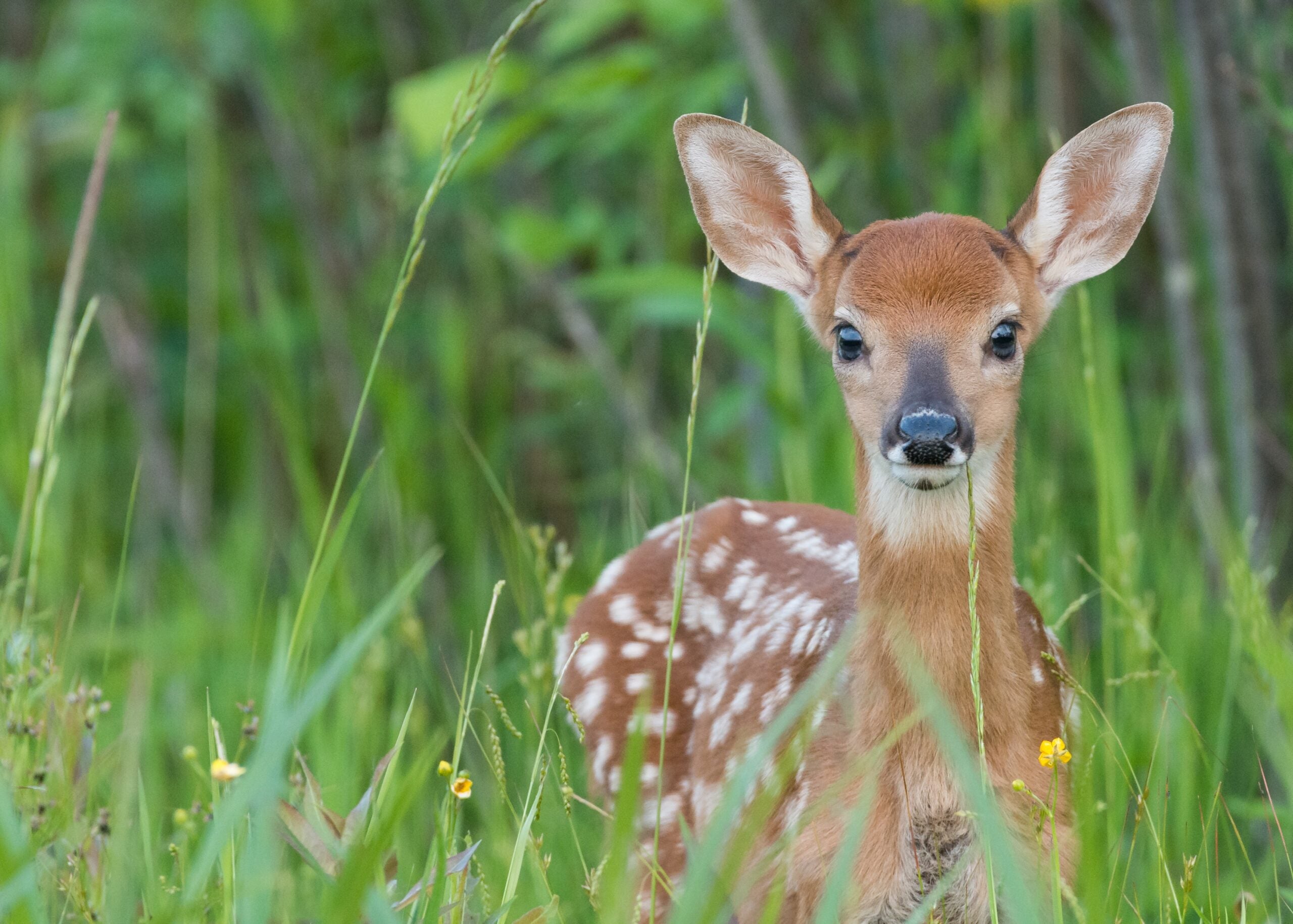
Finding the fawn when I did was also a good omen. In the upper Midwest and across the northern reaches of whitetail range, fawns born in May and June are simply better equipped to survive the weather and temps of their first few days of life and the coming late fall and winter. Fawns dropped too early can succumb to cold, wet spring weather, and fawns dropped too late (though rare, I have seen spotted fawns as late as September) are just not as physically developed and, while certainly not doomed, they are going to face some true challenges if the winter is a hard one. Remember, mature does and bucks will drive a fawn off a winter food source to insure their own survival, so if food is not abundant, any late-born fawns are in serious trouble.
Overall Deer Herd Health
Finally, the timing of the fawn drop is also a good indicator of buck-to-doe ratios and overall herd health. Late-born fawns typically mean that doe populations could be out of control; if there aren’t enough bucks to service does as they come into estrous, the does will continue to cycle every 28 days, often until they are bred. This prolonged rutting activity is not good for a deer herd; not only does it result in late-born fawns, but it stresses bucks as they chase and breed does for months instead of weeks. Having a relatively brief, perfectly-timed rut is the best for deer.
Sadly, I didn’t find any morels that May afternoon, but I found something even more important; a healthy, new-born fawn that not only provided me with some moments of beauty, but gave me a glimpse into the health of the deer herd.
Read the full article here