



We may earn revenue from the products available on this page and participate in affiliate programs. Learn more ›
What do you picture when you think of fly fishing for trout? If your answer is casting a bug imitation that floats and then watching a fish rise to sip it off the surface, I’d say you fall in with the majority of folks on the periphery of fly fishing. You probably don’t think of fly fishing with nymphs, or at least, not initially. That’s because surface action is always what fly fishermen want, but the reality is that this kind of feeding is a luxury. For the water to boil, you need aquatic insects to be hatching, and then you need the trout to be tuned into them—and despite what you may believe, just because there are bugs on the surface doesn’t mean the trout always care.
The truth is that 90 percent of a trout’s food consumption happens below the surface, and the way to mimic the majority of those food sources is by fly fishing with nymphs. No, using nymphs isn’t quite as sexy as a casting to rising fish, but if you only bank on bug hatches, you’re going to catch a lot few trout. Nymphing is actually quite complex. Volumes have been written about it, but you don’t need to read them all to harness the power of these subsurface flies. With a basic understanding of what nymphs are and how to present them, you’ll keep your rod bent on those days when you can’t buy a bug on the surface.
What is a Fly Fishing Nymph?
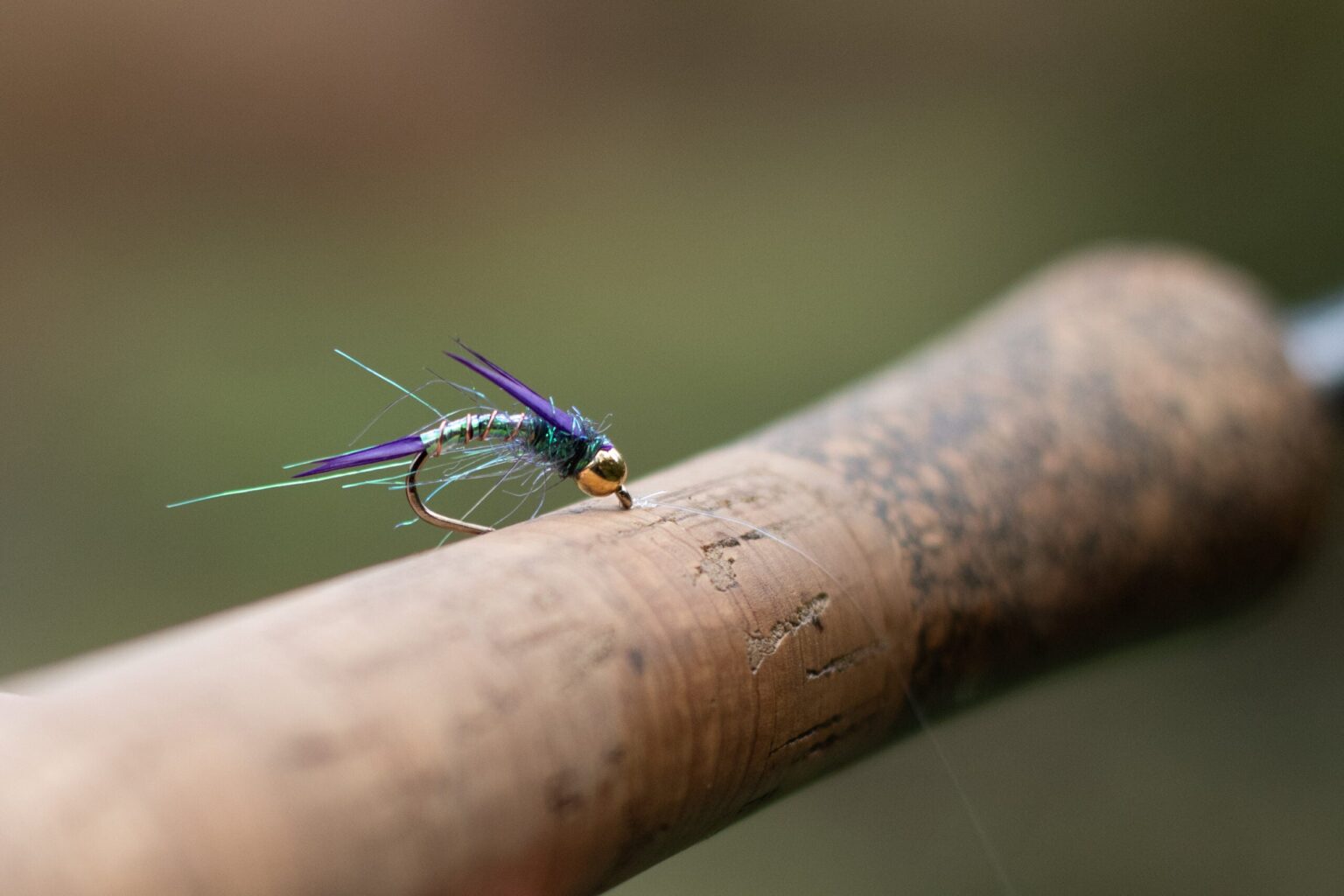
In fly fishing, a nymph is both an aquatic insect in its larval stage and any fly pattern that mimics it. The three main categories of insects that trout gobble from coast to coast are mayflies, stoneflies, and caddisflies. All of these bugs begin their lives underwater. The eggs of these insect species cling to rocks and gravel until they develop into nymphs. In this stage, they crawl around on the bottom feeding, but given their tiny size, they’re easily carried by the current and picked off by hungry trout.
Nymphs that don’t get gobbled eventually enter the emerger phase, during which time they swim or float to the surface and sprout wings. That killer dry-fly action that anglers crave happens during the periods when thousands of emergers come to the surface at the same time and float downstream while they wait for their wings to dry, so they can take flight. But experiencing a good hatch means being in the right place at the right time. Meanwhile, there are nymphs crawling around in trout streams practically 365 days a year, and any given trout will ultimately eat far more of subsurface nymphs during a season than bugs on the surface.
5 Must Have Fly Fishing Nymphs
The amount of nymph fly patterns available out there is staggering, and some of them are extremely detailed and developed for very specific situations and presentation. It can get overwhelming. But the truth is that you can get away with a very limited selection of nymphs, and they’ll catch loads of trout in any stream anywhere in the US. There are hundreds of species of mayflies, stoneflies, and caddisflies throughout the country, but regardless of how different they may appear after emerging from the water, they all look pretty similar in their nymph stages. Here are five fly fishing nymph patter that need to live in your box, and as long as you carry a variety of sizes and colors, you can catch trout anywhere.
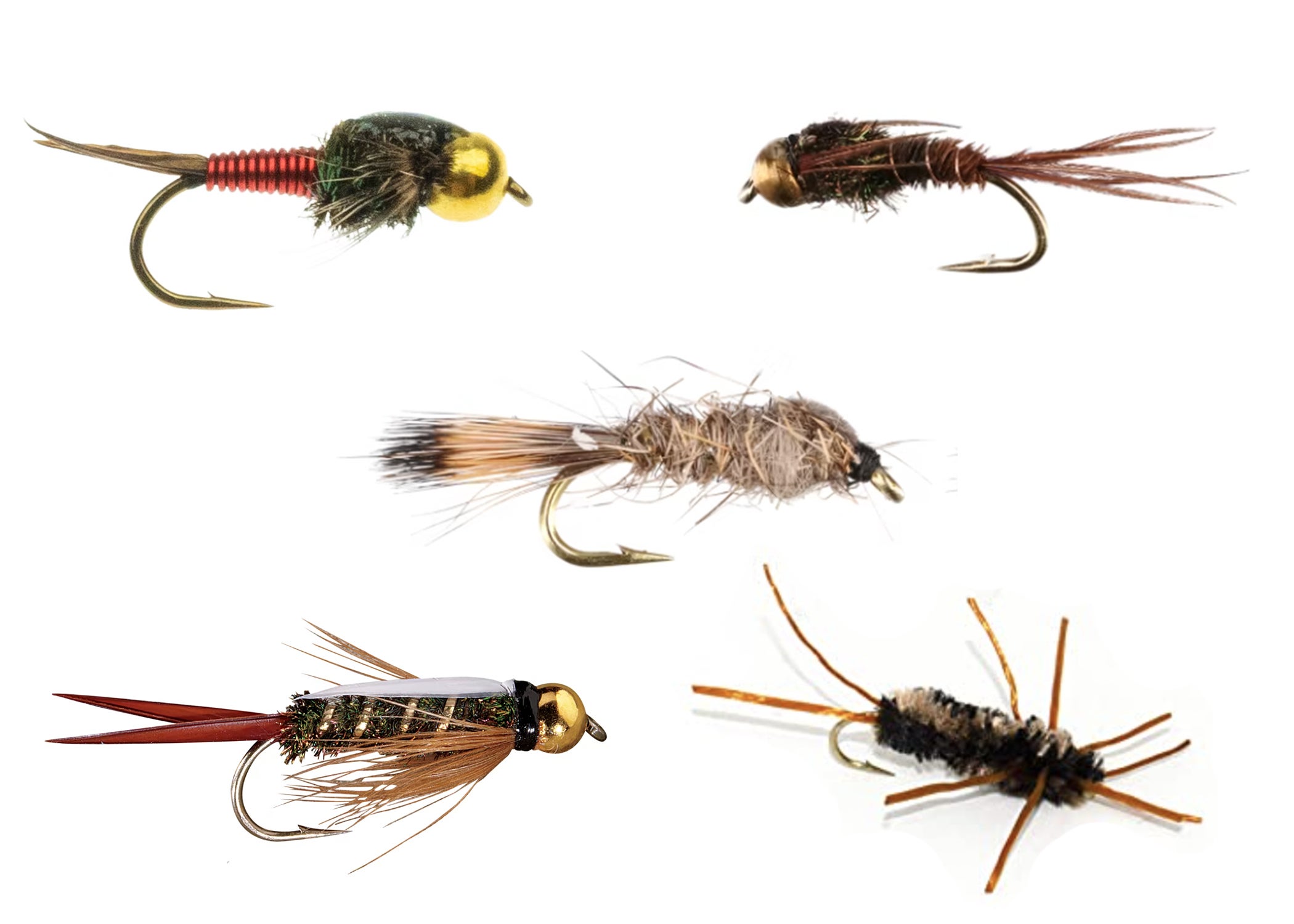
1. Hares Ear Nymph
It’s hard to find a more generic nymph pattern than a Hare’s Ear. Black, tan, and olive are staple colors that allow you to mimic a wide range of aquatic nymphs.
2. Prince Nymph
Though technically a stonefly nymph imitation, a Prince Nymph is a perfect match for any dark nymph, and I believe its white wing makes it stand out even when natural nymphs in the water lack this detail.
3. Copper John
One of the most potent nymphs ever tied, the traditional version draws its name from its copper wire-wrapped body. However, red wire and chartreuse wire bodies are also very popular.
4. Pheasant Tail Nymph
Similar to the hare’s ear, a Pheasant Tail is sparse and generic, helping it mimic a huge range of nymphs. They’re available in loads of colors, but tan is arguably the most popular.
5. Girdle Bug
This simple weighted pattern featuring nothing but a plain chenille body and rubber legs looks kind of goofy, but the Girdle Bug is a terrific generic imitator of larger stonefly nymphs.
How To Fly Fish with a Nymph
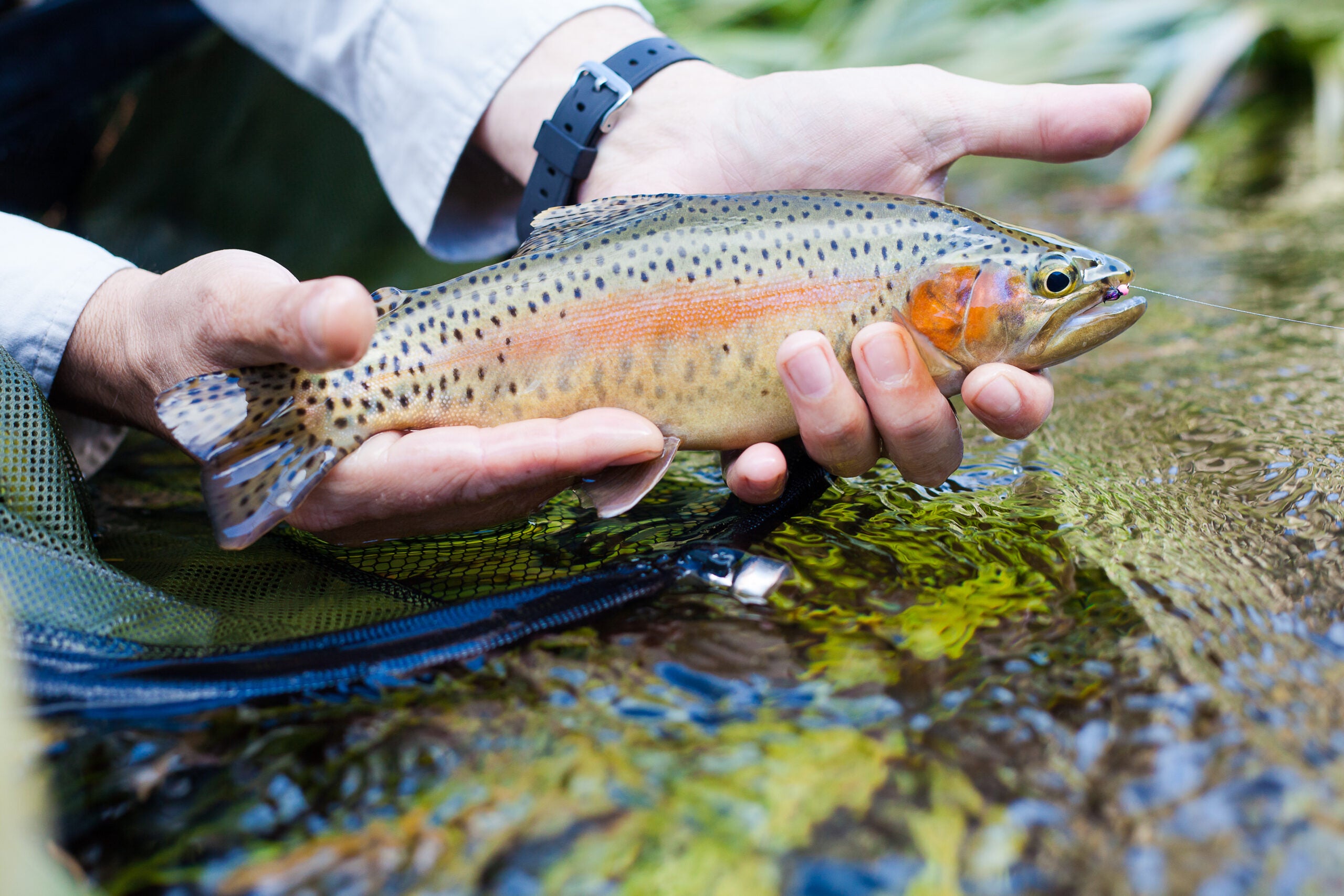
Like all methods of fly fishing, nymphing can get pretty advanced and technical, but you don’t have to master every nuance to use these flies successfully. The simplest approach is to fish a single nymph below a strike indicator—which is really just a fancy term for a bobber.
Strike indicators come in all shapes and sizes, but my favorite has always been the Thingamabobber because it’s extremely buoyant and loops onto your leader quickly and easily. You want your nymphs to be hovering just off the bottom as your line drifts downstream, and you can achieve the right depth by adjusting the position of the indicator.
Most nymph patterns are weighted, either internally with wraps of thin lead wire or via a metal bead head. In shallower runs, you might not need any more weight to get your nymph down in the zone, but often you’ll want to add a tiny split shot or two roughly a foot above the nymph. This is especially critical in a short zone. As an example, if the hole you’re trying to fish is 3 feet deep but only 15 feet long, by the time the nymph reaches the proper depth without an assist from some split shot, you might only be fishing the last couple feet of the hole at the proper depth.
One thing to keep in mind is that the farther away your target zone, the harder it will be to effectively hit it with a nymph. Yes, you might be able to reach it with the 30-foot casting, but the drag on all that fly line between the rod tip and your strike indicator will make it very difficult for the nymph to reach the proper depth. In the ideal scenario, you’re nymphing a target zone no more than 20 feet away from the end of your rod tip. This allows you to hold the rod tip high and keep as much fly line as possible off the water to achieve a drag-free drift and get the nymph down fast. If a trout grabs your nymph aggressively, you might see your whole indicator quickly dip below the surface. However, nymph strikes can be subtle, so any time that indicator stops or stutters, set the hook just in case, and there’ll be a good chance that you’ll quickly feel the weight of another trout that was feeding below the surface.
Read the full article here