



I’ve had fish tanks since I was 5 years old. My dad was very into aquariums as well, so for many years I had a little one in my room, and he kept a big 50-gallon tank in his office. We had every kind of freshwater fish that was sold, from goldfish to cichlids. When I was ten, I even kept a few bluegills and crappies I’d caught. Every time we visited the pet shop, I gawked at the clownfish and moray eels and begged dad for a saltwater tank. He refused for a long time, trying desperately to explain how much more of a pain in the butt it was and money it cost to keep saltwater fish. Eventually, though, he gave in—and he was right. Until you’re the one who has to deal with the nuances of keeping saltwater fish happy and healthy in an unnatural environment, you don’t understand the struggle.
You can apply the same theory to raising gamefish. Hatcheries around the world successfully rear trout, catfish, bass, walleyes, muskies and loads of other fish that end up in lakes and rivers and ultimately on our hooks. In some cases, we can thank hatcheries for rebuilding long-gone populations of fish, but the caveat is that they’re all species that live in freshwater, or return to freshwater (like steelhead). However, over the years, I’ve heard people say things like, “they raise all kinds of fish. Why don’t they start raising flounder if their numbers are so low?”
Because it’s not that simple with saltwater fish, though Louisiana is giving it a shot with redfish.
Raising Red Flags
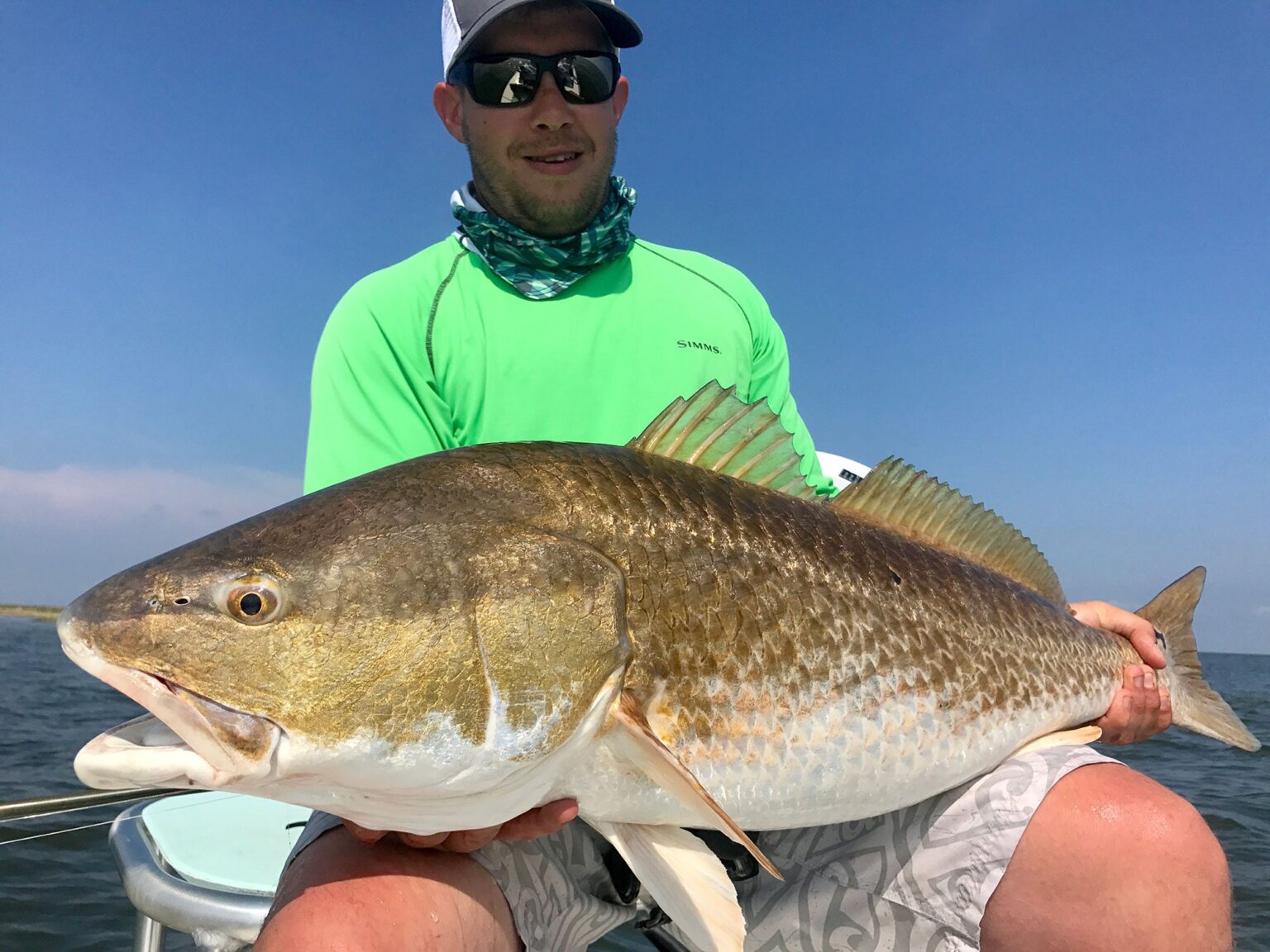
According to the story on Nola.com, Louisiana is in the early stages of greenlighting a small pilot program that will stock hatchery-raised redfish in one area of the state’s coast. While programs like this have existed elsewhere for some time, this is new to Louisiana, where a sharp decline in redfish populations due to overfishing and habitat loss over the last decade have forced the state to impose tighter restrictions on redfish anglers. Redfish are a huge draw for local and visiting anglers.
The program will kick off with 10,000 redfish raised in a hatchery being stocked in Lake Calcasieu just north of New Orleans. Part of the reason the project can move forward is because, according to officials, it can be executed with no cost to the state. Taken at face value, it sounds like a great solution for a big problem, but if you read the fine print, the state already understands it’s a baby test that could lead to a solution down the road, but hatchery-raised redfish are not a miracle cure.
“It’s not an effort that we think is going to rebuild the redfish population,” assistant secretary at the Department of Wildlife and Fisheries, Patrick Banks, told NOLA.com. He stressed that reductions in catch limits are needed. “But this has been a request in front of us for quite some time, and we just felt like it was the appropriate time to at least test the method.”
Raising enough of any kind of saltwater fish to repopulate a vast system like the Louisiana Delta or the ocean is impractical. First, the team must establish if the fish can even survive in their hatchery.
Playing the Long Game
The seafood industry has arguably had more success raising saltwater species than conservation initiatives have, though even their operations aren’t perfect. Successful salmon farming, as an example, requires mature fish to be held in massive floating cages that take up a lot of space. In some cases, the fish are genetically modified, which then causes issues if the holding pens are breached, and farmed fish end up in the wild. One of the most ambitious attempts to raise saltwater fish made headlines last year, as a team from Japan showed early success in breeding bluefin tuna in captivity. Theoretically, if enough tuna could be raised to supply the market and reduce wild catches by even 50% it would be a huge win. However, Louisiana’s program has little to do with supplying seafood buyers.
The bigger—and shorter-term—payout of the stocked redfish program would be using genetic sampling to trace lineages. Instead of older methods like tagging fish, fin clips of reds provided by volunteer anglers would allow scientists to determine if any recaptured fish were from the hatchery, or if they were related to the hatchery fish. According to the NOLA story, a return rate of just 15% to 25% would be a huge success. If those numbers can be achieved, it would prove that supplemental stockings do, in fact, impact wild reproduction which means more redfish. Seeing those results from an angling perspective, of course, could take decades.
READ NEXT: Best Redfish Lures
South Carolina has been supplementally stocking redfish since the 1980s. How many they stock each year varies, but according to their department of natural resources, 10% to 20% of the 1-year-old redfish sampled in their larger estuaries are from hatcheries. The state considers this a win, not only because these fish are supplementing the stock, but because of the scientific data the program provides.
It’s reasonable to think that someday hatchery programs could benefit species like coastal striped bass and seatrout in areas where their numbers are falling, but when it comes to raising salty fish, it’s a marathon, not a sprint.
Read the full article here