





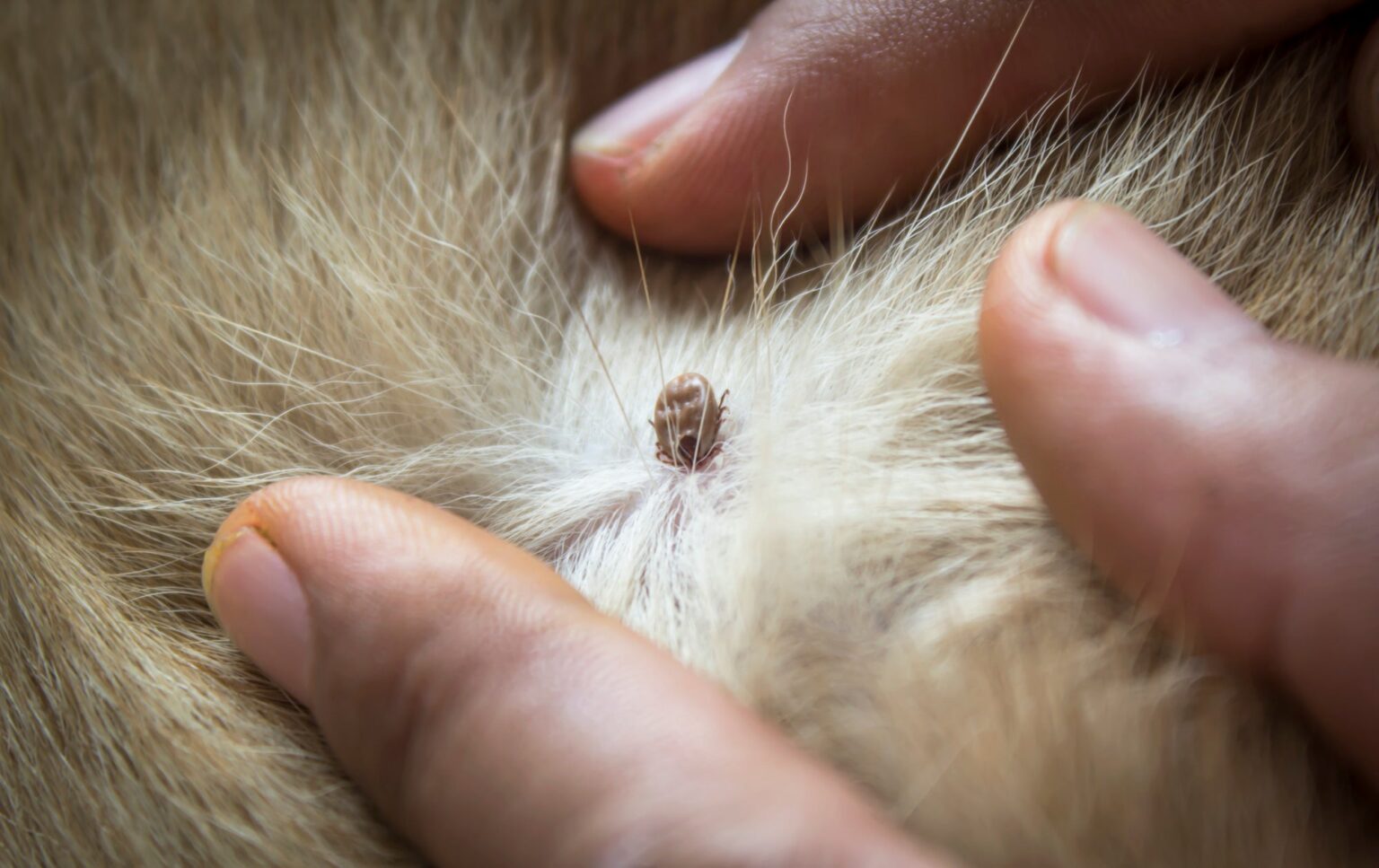

Maybe you already know how to remove a tick from a person, but do you know how to remove a tick from a dog? Every dog owner should possess this skill. Because when it comes to pulling ticks off your pup, it’s a matter of “when,” not “if.” Every dog is going to get bit by a tick sooner or later, no matter if its a hardworking bird dog or the family beagle. Several common types of ticks can be found everywhere in the lower 48 these days, and they’re also more prevalent now thanks to climate change.
“Historically we had a seasonality to our ticks,” Cincinnati-area veterinarian Dr. Mark Hayes tells Outdoor Life. “In Ohio, we would get cold enough winters that we wouldn’t see ticks then. But now I see deer ticks all winter long. We’re really seeing them year-round.”
Most tick bites are benign. But ticks also carry diseases like Lyme disease and Rocky Mountain spotted fever. Whether you have a family dog or one of the best hunting dog breeds that spends plenty of time outside, it’s in your dog’s best interest that you know how to remove a tick quickly and effectively. You should also know what tick bite symptoms to watch for after removing one. Here’s what the experts recommend you do.
Steps for Tick Removal
The first rule is to remain calm. This will help keep your dog from freaking out. See if someone else can hold your dog still so you can use both hands to find and dislodge the tick. While you’re at it, double check to make sure what you’re looking at is definitely a tick and not a skin tag or a mole. If it has small legs sticking out around the attachment point, is a different color than your dog’s skin, and if your dog doesn’t yelp when you pull on it, odds are it’s a tick.
Tools You Will Need
- Tweezers or a tick removal tool
- Disinfectant, like antibiotic ointment or hydrogen peroxide
- A buddy to help hold your dog steady (optional)
- A headlamp or a flashlight (if you have a buddy) in the event of low or poor light
Step 1: Grab tweezers or a tick removal tool
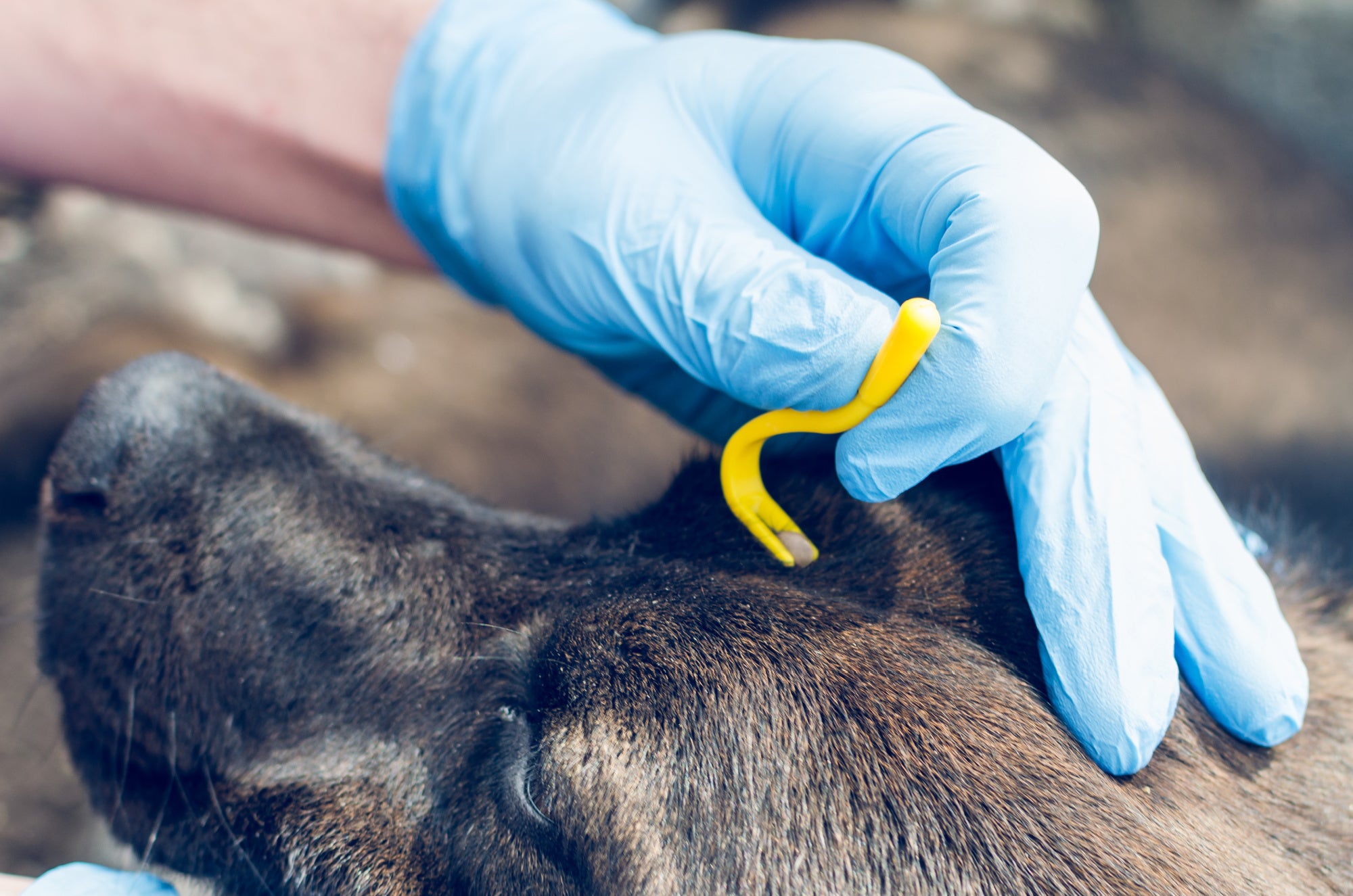
While you might be able to remove the tick with your fingernails, it’s safer to use precision tools like a Tick Key or a Homesake Tick Remover if you have access to one. If you try to remove the tick with your bare fingers, you run a higher risk of prying the tick body off but leaving the head embedded (this is not good). Tweezers are also perfectly fine, Dr. Hayes says.
Step 2: Hold the fur back with your non-dominant hand.
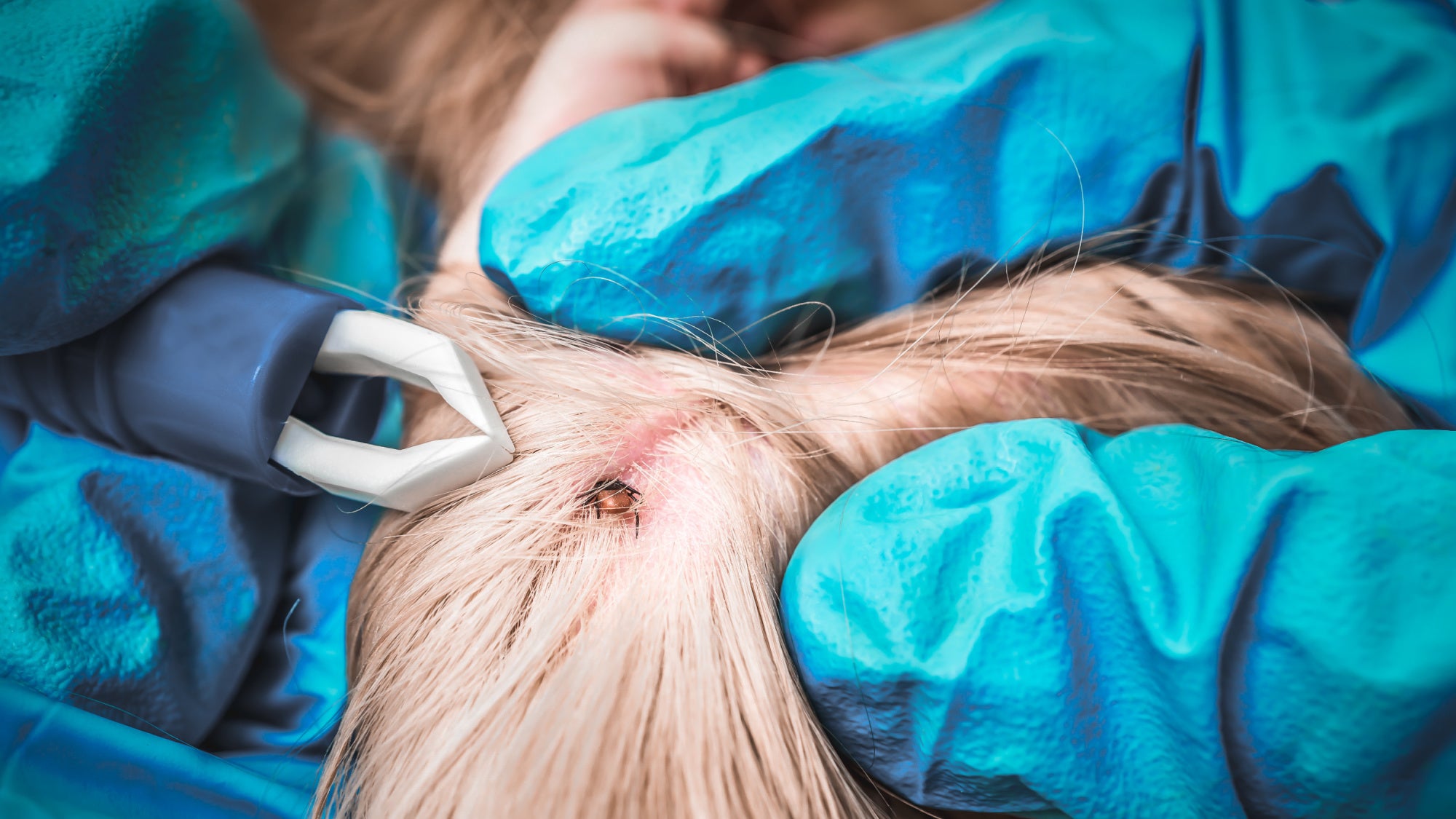
Get as clear a view of the tick as you can. If the area has some extra loose skin, pull the skin away from the body and pinch well below the tick to bulge the bite area out like you might with a splinter. If the tick is under the ear, fold the ear backwards to expose the tick as much as possible.
Step 3: Grab the tick as close to the skin as possible with the tweezers or tick key.
With any luck, you’ll get a grasp on part of the head, ensuring you don’t leave it burrowed in the skin. Some ticks burrow deeper than others, but legs should be visible around the attachment site.
Step 4: Pull straight up to dislodge the whole tick.
Pulling at an angle with tweezers will increase the risk that the body pops off the head. If you pull straight up, the head should detach from the skin cleanly. Don’t expect the tick to come free immediately. You might have to pull pretty hard. Just try to not crush the tick’s body or rip the head off in the process. If you’re using a tick removal tool, follow the instructions for how to remove the tick. Some tools require that you twist the tick or pull sideways rather than straight up in order to remove it from your dog.
Step 5: Check the bite mark.
Look closely at both the tick and the wound site. If the tick still has its two-pronged jaw and head attached to its body, and the bite mark doesn’t have what looks like a tiny splinter stuck in it, you got the whole parasite out. If part of the tick’s head is missing, look back at the bite mark and see if you can get a grasp on the remaining piece. Don’t dig at it too much—this only increases the risk of infection.
Step 6: Disinfect the bite mark.
Any over-the-counter antibiotic ointment or hydrogen peroxide will get the job done. If you use hydrogen peroxide on a dog with a dark coat, it will likely bleach the coat a little. You can use an eyedropper to apply it if you’re worried about a blond patch. If you use ointment, apply it liberally. Watch the bite mark in the days that follow. A red bump or small rash might emerge. This is generally normal and doesn’t immediately mean the dog has a tick-borne illness, but Dr. Hayes recommends you still take your dog to the vet to get it checked out.
Do Dogs Get Tick-Borne Illnesses?

Tick-borne illnesses are nasty and potentially deadly, which should motivate you to remove the tick from your dog as fast as possible. Just like humans, dogs can get Lyme disease, Rocky Mountain spotted fever, and a variety of other tick-borne illnesses that dog owners should be aware of. Most tick-borne illnesses present similar symptoms in dogs. They might take three weeks or more to emerge, so watch your dog’s behavior closely.
First, look for fever. A dog’s eyes will turn red, they will emanate heat from their ears and nose, and their behavior will turn lethargic. If your dog is also exhibiting joint stiffness, lameness, swelling, or is limping or exhibiting other behavior that indicates they are in pain, there’s a good chance they’re dealing with a tick-borne illness. Also keep an eye out for decreased appetite, lethargy, malaise, diarrhea, vomiting, respiratory issues, or any other concerning symptoms.
Potential tick-borne diseases in dogs include:
Ways to Prevent Tick-Borne Illness in Dogs
Just as we seek out the best tick repellents for our own well-being in the woods, pets deserve useful preventative measures, too. The best way to prevent tick bites and subsequent illness in your dog is by talking to your vet and getting a prescription for an oral medication, Dr. Hayes says. Most of these “pills” are nearly indistinguishable from normal dog treats. They deliver antibodies to your dog’s bloodstream that will kill any ticks that latch on.
“A product like NexGuard that you give your dog once a month won’t prevent ticks from getting on your animal but it will kill them before they can transmit that bacteria,” Dr. Hayes says. “Those ticks have a hard shell, so they’re hard to kill, but they’ll die pretty quickly. I really like Nexguard, but you should talk to your vet.”
Over-the-counter topical products also help with prevention. Options range from a once-monthly ointment application like Frontline Plus to the good ol’ fashioned flea and tick collar, like this one from Seresto. Unlike the oral medication, these topicals act as high-powered repellents that keep bugs at bay. Some even kill fleas, ticks, lice, and larvae. (Dr. Hayes cautions against using dog-specific products on cats, as they’ve been known to be toxic to felines.)
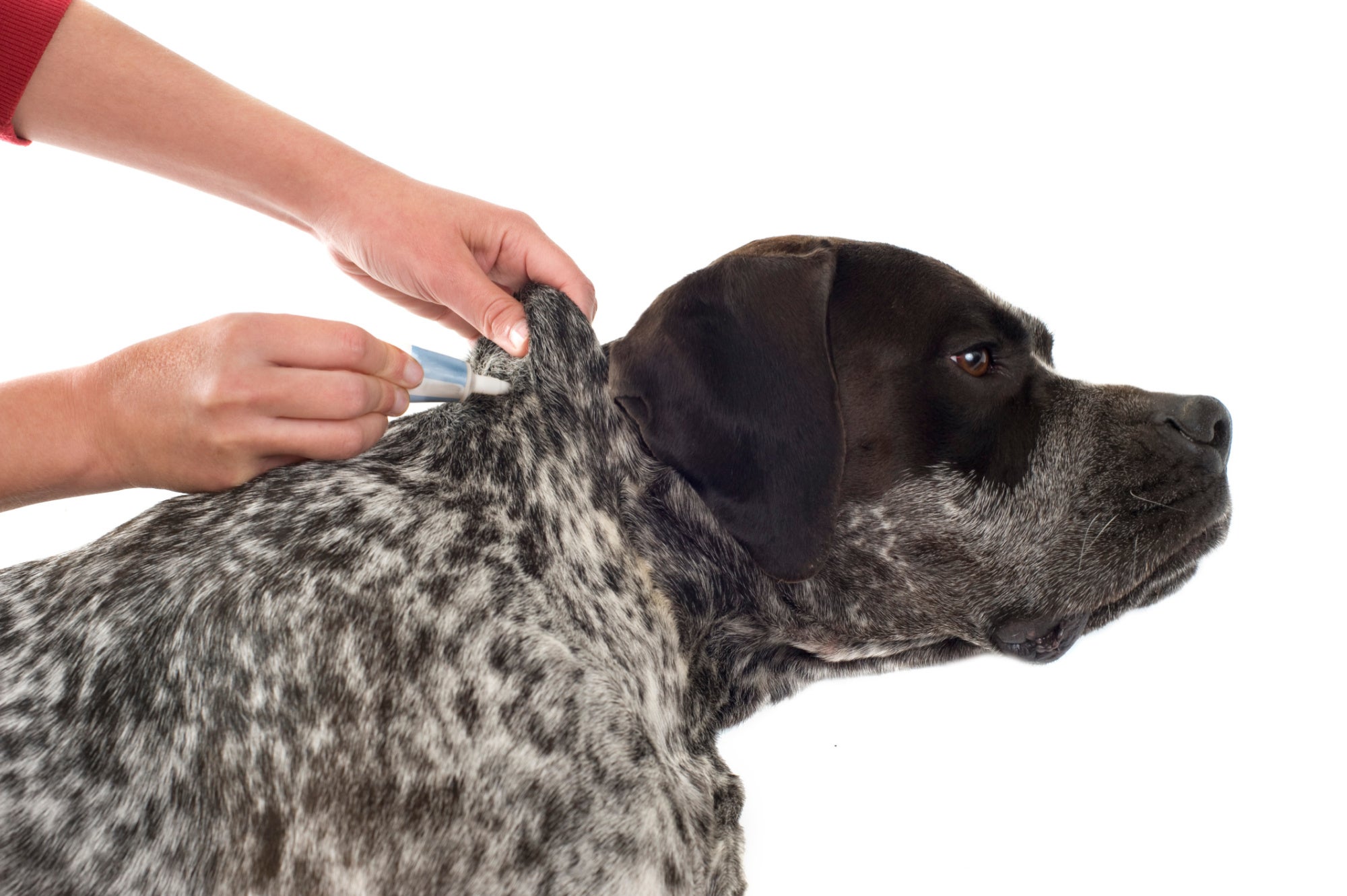
Whether you choose an oral prescription or an over-the-counter topical option, Dr. Hayes also recommends also considering the canine Lyme vaccine for your dog.
Read Next: Best Dog GPS Trackers
“Definitely get the Lyme vaccine if it’s in your area or you’re going to travel to an area with it. The vaccine has [few] side-effects. Then do monthly prevention, too,” Dr. Hayes says. “Prevention is a lot easier than trying to play catch-up.”
FAQs
How long can a tick survive on a dog?
After latching on, ticks will feed on their hosts for several days before eventually falling off to transition into their next life cycle. If the tick is carrying a disease, transmission will happen after just a few hours of feeding.
Does hand sanitizer remove ticks?
While the alcohol found in most hand sanitizers will kill ticks, it will not help to detach them from the host. Save your hand sanitizers, alcohol wipes, and other forms of disinfectant for treating the bite mark after successfully detaching the tick.
What kills ticks on dogs immediately?
Oral prescriptions like NexGuard give your dog’s bloodstream special antibodies that will kill ticks as soon as they latch on. Some topical repellents like FrontLine Plus and flea and tick collars like Seresto kill ticks and other bugs on contact.
Will my dog survive a tick?
Even if you don’t remove the tick before it’s engorged, there’s still a good chance your dog will make it through the experience unscathed. First of all, the tick might not have been carrying any diseases. (Depending on your region, up to half of all black-legged ticks carry Lyme disease, for example.) But if the tick was carrying something nasty and successfully transmitted it to your dog, modern veterinary medicine is your best friend. Bring your dog to the vet as soon as your dog exhibits any concerning symptoms. Those might include a swollen bite mark, a fever, signs of joint pain, or decreased appetite.
Final Thoughts on Removing Ticks from Dogs
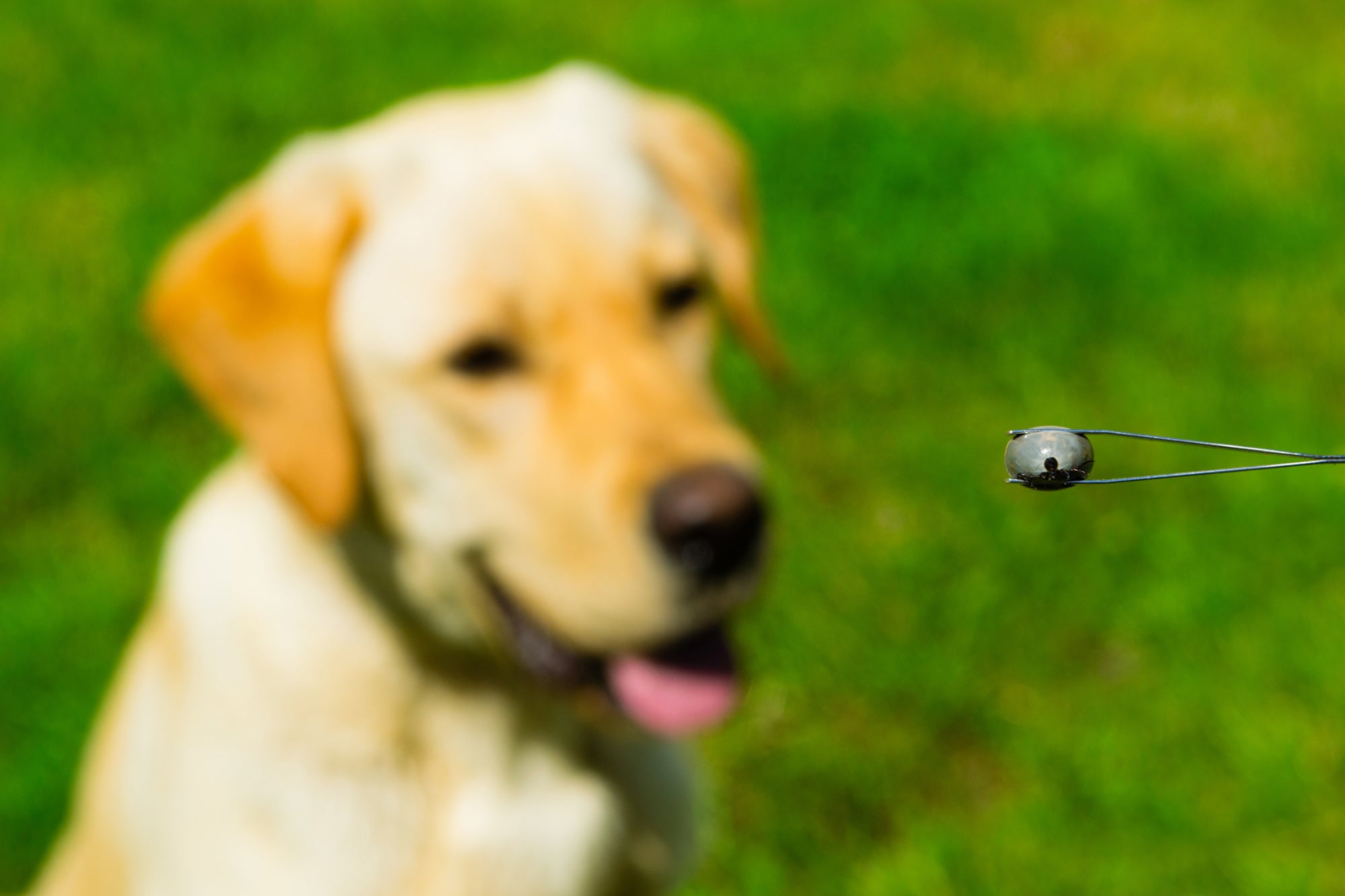
If you find a tick latched onto your dog, don’t panic. Instead, reach for your fine-tipped tweezers or trusty tick removal device and remain calm. First, focus on removing the tick from your dog in one piece. Then worry about watching for symptoms of a tick-borne illness in the days and weeks that follow.
If you can’t stand the idea of a small parasite feeding on your pup, talk to your veterinarian about proper prevention techniques and the Lyme vaccine for dogs. It could make the difference between a fun summer spent outside and an expensive (and nerve-wracking) summer spent at the vet’s office.
Read the full article here