



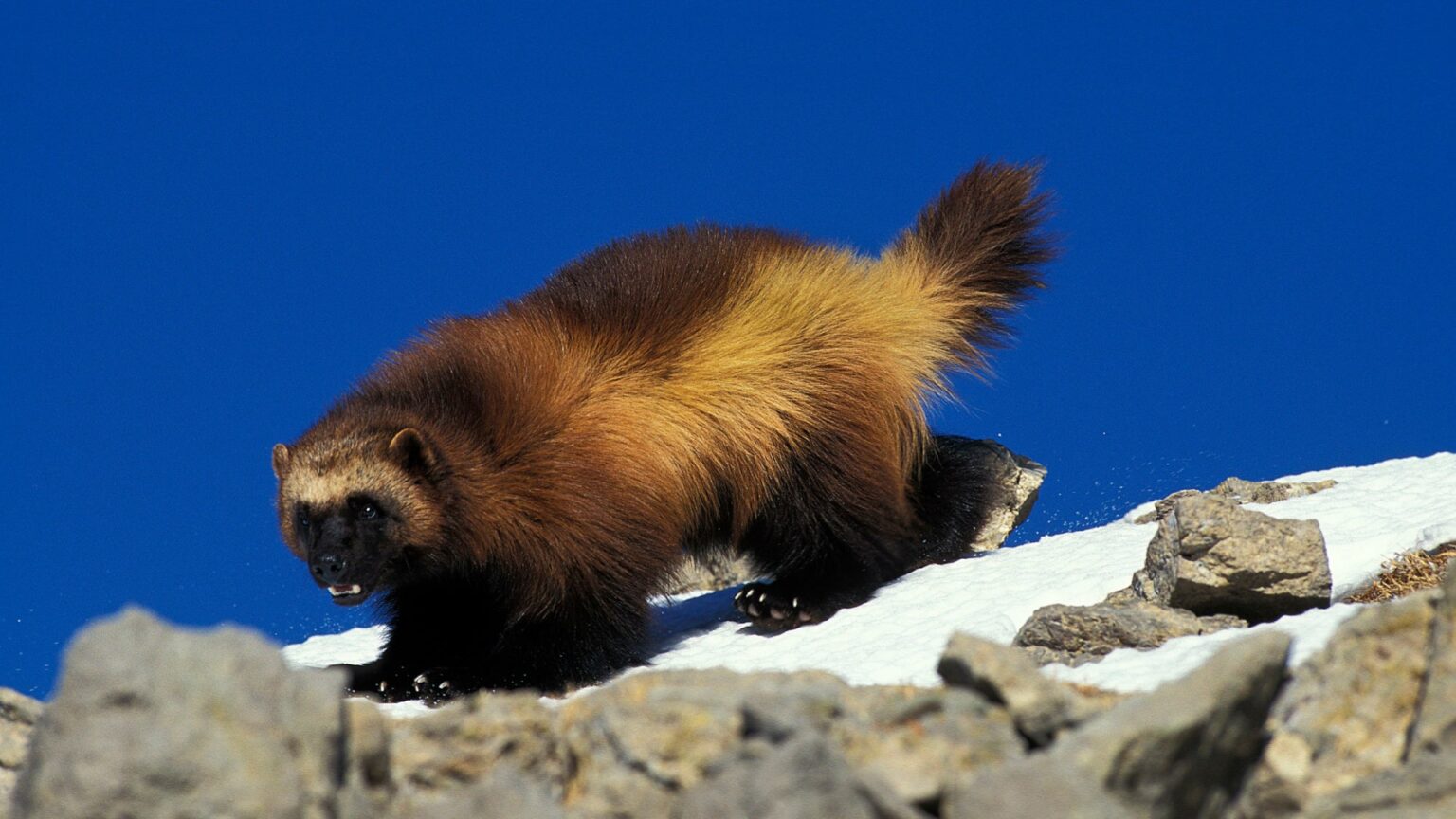

The U.S. Fish and Wildlife Service has until the end of November to decide whether wolverines in the Lower 48 warrant protections under the Endangered Species Act. In an updated assessment released in September, the federal agency re-addressed some of its concerns surrounding the species and whether or not it should be listed as “threatened” due to the effects of climate change and habitat loss. This is the latest in a back-and-forth debate surrounding the species, and it’s a distinct change of tune from the agency’s last assessment.
This potential listing would only pertain to wolverines in the contiguous United States, as their populations remain stable in Alaska. It could affect how certain states manage the species, although the regulations differ from state to state. Wyoming, for example, manages wolverines as a “species of greatest conservation concern” and prohibits trapping or hunting them.
On a bigger scale, the ESA listing could change how alpine forests are managed across the West. Because so much of the wolverine’s core habitat exists on what is already federal land, it wouldn’t cause much of a stir among private landowners. But it could have implications for logging, mining, and public land recreation.
When it comes to a wolverine’s ability to survive and adapt in a fast-changing West, the rugged creature is surprisingly needy. They can’t reproduce properly without the presence of spring snow. They need large swaths of untouched, high-alpine wilderness to hunt and breed. They don’t like human disturbance, and they don’t like dispersing across low-elevation areas to interact with other populations or find other chunks of functional habitat. But climate change, urban sprawl, and America’s obsession with high-alpine winter sports aren’t slowing anytime soon.
Aside from the hard-to-access terrain they inhabit, wolverines are elusive critters with expansive territories, which makes it difficult for wildlife biologists to estimate their populations. Their management has also been complicated over the last decade by a series of petitions, assessments, proposals, and withdrawals.
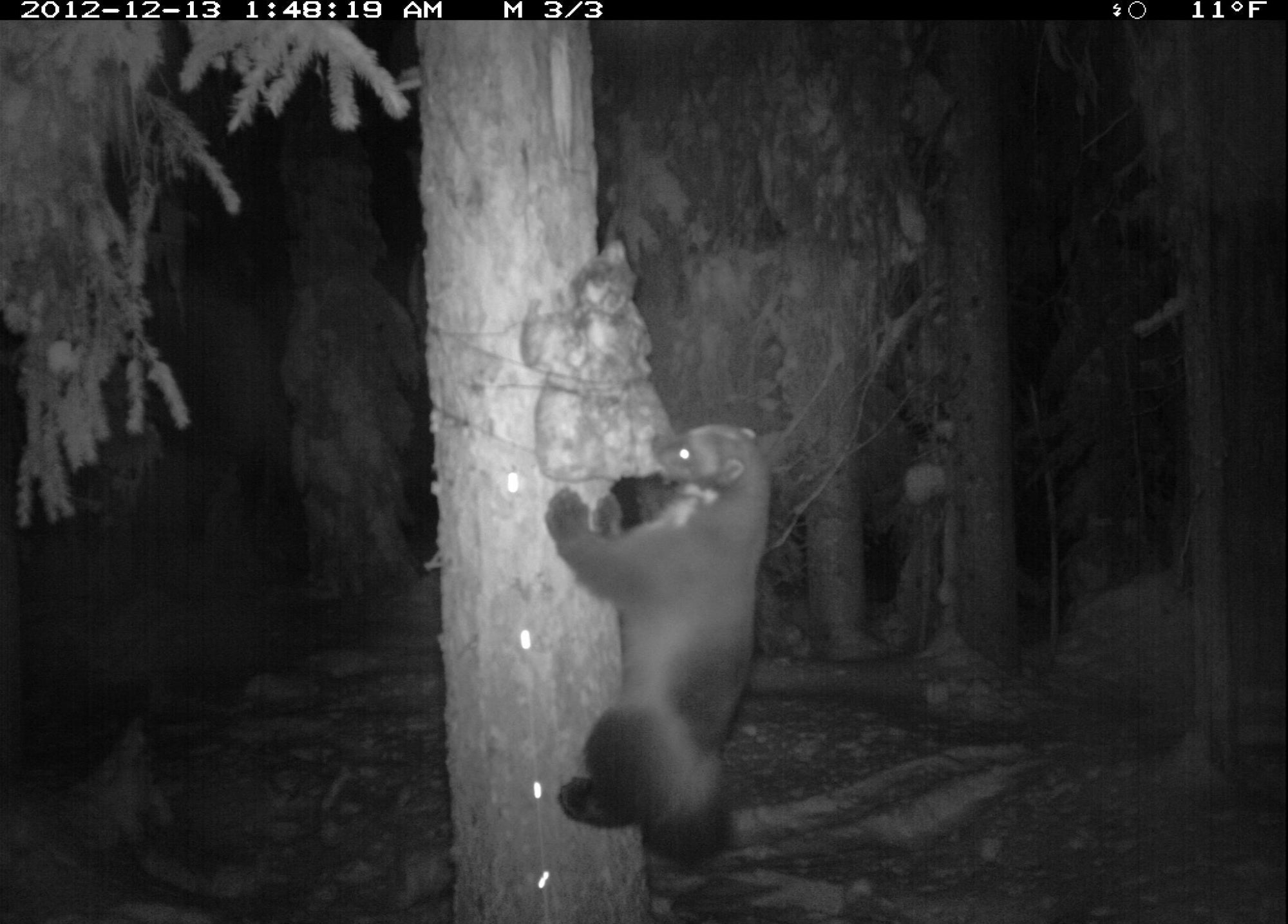
In 2013, the USFWS proposed to list wolverines in the contiguous U.S. as a threatened distinct population segment. The agency withdrew that proposal in 2014, but a court order reinstated it in 2016 following lawsuits from wildlife advocacy organizations.
The USFWS then withdrew its proposal again in 2020, “finding that the loss of wolverine habitat due to climate change and other stressors was not as significant as we found in our 2013 proposed rule” and that “wolverines in the contiguous U.S. were not discrete from wolverines in Canada, and therefore did not qualify as a [distinct population segment] under the [Endangered Species Act].” But that withdrawal sparked another slew of lawsuits from the same organizations and, two years later, the USFWS was back to studying wolverines again.
The results of the most recent study renege on the previous statement from the 2020 withdrawal. According to that assessment, the stresses of climate change are having an impact, and all is not well with wolverines in the Lower 48.
Read Next: Wolverine Spotted in Western Oregon for the First Time in Over 30 Years
“Although historical wolverine populations were likely naturally small and distributed among patches of high-elevation alpine habitats in the contiguous U.S., core wolverine habitats are projected to become smaller and more fragmented in the future as the result of climate change and human disturbance,” the assessment reads. “Overall, future wolverine populations in the contiguous U.S. may be less secure than we described in our 2018 [Species Status Assessment].”
The USFWS will submit their final determination to the Federal Register on Nov. 27, USFWS public affairs officer Amanda Smith told WyoFile.
Read the full article here