





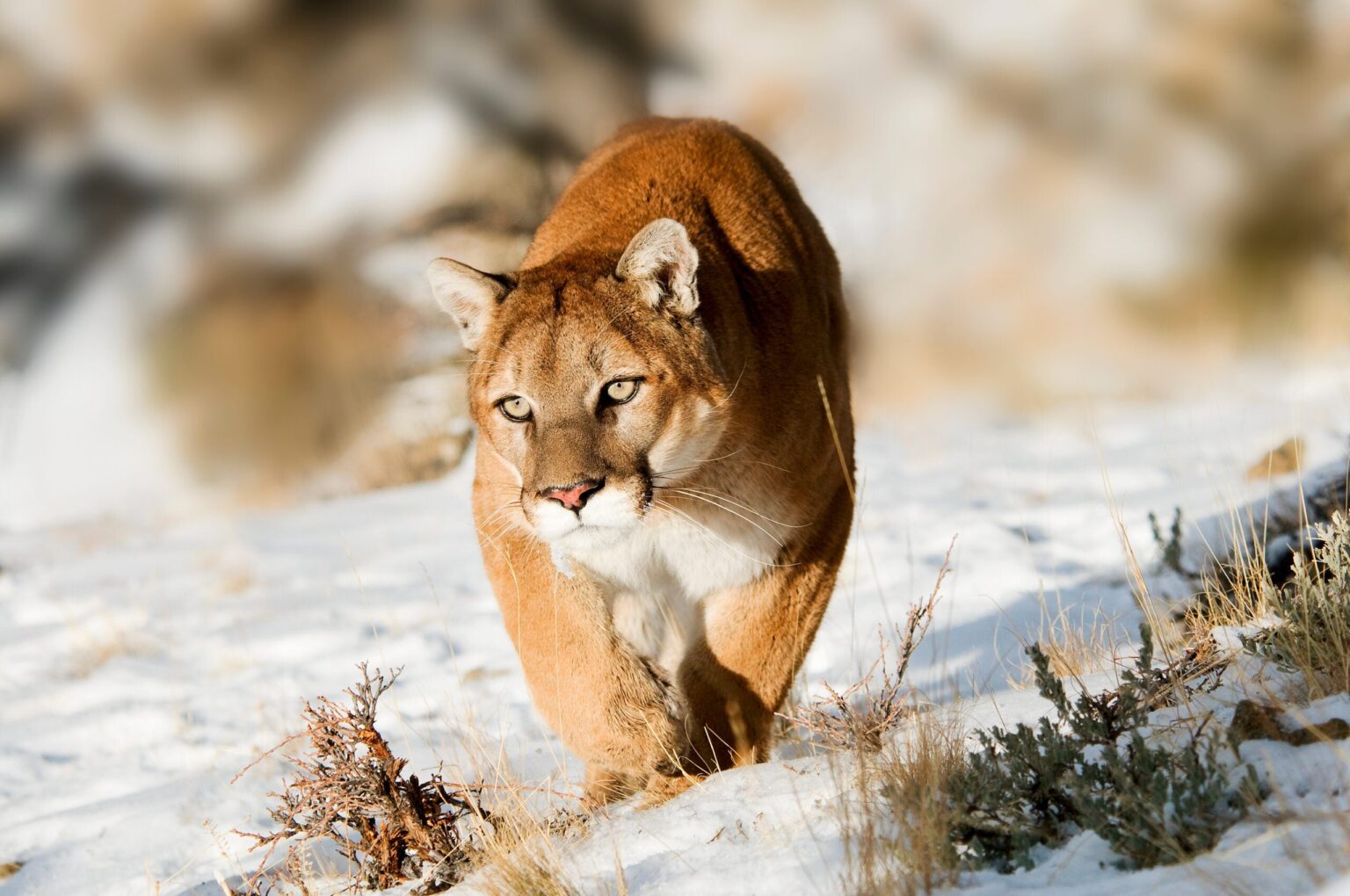

Of all of the wildlife species found in the vast wilderness of North America, few inspire as much awe and trepidation as the mountain lion (Puma concolor). These elusive predators have many names, such as cougar, puma, panther, catamount, ghost cat, or painter. They are apex predators that command respect. While encounters with mountain lions are statistically unlikely—and attacks are rare—outdoor enthusiasts need to be prepared. This guide on how to survive a mountain lion attack will walk you through what to do if you encountering one of these magnificent beasts.
Table of Contents
- Mountain Lions vs. Humans
- What to do if You See a Mountain Lion?
- What to do if a Lion Acts Aggressively or Moves Toward You?
- What to do During a Mountain Lion Attack?
- How to Fight a Mountain Lion
- FAQs
Mountain Lion vs Humans
Mountain lion attacks on humans in North America are relatively rare events. Since the early 20th century, there have been fewer than 125 documented cases of mountain lions attacking humans. Even more reassuring is that out of these incidents, fewer than 30 have resulted in fatalities. This low number is particularly striking when one considers the expansive range of mountain lions and the frequent human activities that occur within their territories. Many experts believe many of these attacks result from the mountain lion mistaking a human for prey. This is especially likely when the individual is crouching, running, or if the person is a child. There are also instances where mountain lion attacks might occur because a human inadvertently comes between a female mountain lion and her kittens.
Where do Mountain Lion Attacks Take Place?
Geographically, while mountain lions were historically found throughout the U.S., their presence in recent times is mainly concentrated in the Western states. However, there have been increasing reports of sightings extending to the Midwest and even the East. But California accounts for a notable number of attacks in the past few decades. The late 20th and early 21st centuries saw a slight uptick in mountain lion–human interactions. This trend is likely attributable to human encroachment into mountain lion habitats and a rebound in mountain lion populations in certain regions.
When Are Mountain Lions Most Active?
Despite these interactions, wildlife agencies consistently emphasize prevention as the most effective strategy. Recommended precautions include avoiding hiking or jogging alone during the mountain lion’s most active periods at dawn, dusk, or night, ensuring children remain close to mountain lion territories, and steering clear of areas with known recent mountain lion activity. The overarching message is that while any wild animal encounter carries inherent risks, the probability of a mountain lion attack remains statistically very low, and being informed and vigilant can further mitigate these risks.
What to do if You See a Mountain Lion?
Like with all wild animals, your key to safety is avoidance. Once you see a mountain lion, give yourself or it a wide berth to continue. This is particularly useful if the animal is on a feeding site, such as a dead animal. They will likely defend their food source, and you should give them no reason to think you are a threat. If you come very close to one by surprise, first and foremost, stay calm. Running can trigger a chase instinct and cause the animal to begin the chase. Instead, stand tall and make yourself appear larger by raising your arms or opening your jacket. Maintain eye contact, but do not approach the animal. Speak firmly and loudly to assert your presence. Slowly back away without turning your back on the lion.
What to do if a Lion Acts Aggressively or Moves Toward You?
Like many wild animals, mountain lions exhibit specific signs when they feel threatened or are preparing to attack. Recognizing these signs can be crucial for anyone encountering one in the wild. An aggressive mountain lion may fixate on you with an unblinking stare, a behavior distinct from many animals that typically avoid direct eye contact. If the lion appears to be following you or is low to the ground, it may assess you as potential prey.
Signs of Mountain Lion Aggression
The universal sign of discomfort or aggression in many feline species, including mountain lions, is when they pin their ears back. A mountain lion that hisses, growls, or shows its teeth signals aggression. Similarly, like domestic cats, a mountain lion might twitch or lash its tail when agitated or preparing to pounce. The fur along the mountain lion’s back and spine may stand up, known as raised hackles, if it’s feeling threatened. Swatting or batting with its paw is a clear warning sign that the lion is ready to strike. One of the most alarming signs is if the lion approaches you directly.
While some curious mountain lions might observe humans from a distance, a lion that approaches deliberately displays aggressive intent. If you encounter such behavior, knowing how to react is essential. If a mountain lion displays aggressive behavior or starts moving toward you, it’s crucial to assert dominance. Wave your arms, shout, and throw objects in its direction if available. The goal is to convince the lion that you are not prey and might be a threat.
What to do During a Mountain Lion Attack?
Fighting a mountain lion is both defense and offense. Use your best defense if you are caught unaware and surprised by their attack. If a mountain lion makes contact, fight back with everything you’ve got. Protect your neck and throat, as these are the areas they typically target. Use any tools or objects, like sticks, rocks, or even your bare hands.
How to Fight a Mountain Lion
Your primary goal is to make the lion think attacking you isn’t worth the effort. Target the animal’s eyes and nose, the most sensitive areas. If you have a knife or other weapon, use it. I am a fan of firearms use, but this will be best used if you are aware of the attack and time to prepare your shot.
Remember, you’re fighting for your life, so do whatever it takes and whatever you have to defend yourself. The more aggressive and louder you are, the better your chances of scaring it off. You can stab or shoot an animal in the eyes or ears at any point. These are soft tissue areas that lead directly to the cranial cavity.
FAQs
Can a human survive a mountain lion attack?
Yes, many individuals have survived mountain lion attacks by fighting back. The key is to be aggressive and protect vital areas like the neck and head. While any wild animal encounter can be dangerous, your chances of survival increase with the proper knowledge and response. One encounter in 2019 involved a trail runner who killed a mountain lion by stepping on its neck and suffocating it. Although this situation has lots of news, it is way outside the norm of what is most likely to happen. Kudos to that gentleman for his defense, but he was very fortunate that suffocation worked.
What is the best way to stop a mountain lion attack?
The best way to stop an attack is to prevent one. Avoid hiking alone, especially when lions are most active at dawn or dusk. If you encounter one, make yourself appear larger, maintain eye contact, and speak loudly. If it approaches, be aggressive. If it attacks, fight back with everything you have. You can also carry bear spray to defend yourself. In short, attack the mountain lions’ nose, mouth, and eyes with the spray, and they will likely leave the scene. There is some, yet not validated, info that states that putting simulated eyes on the back of your head can “trick” a mountain lion into not attacking your back, which is typical for them. My research did not prove or disprove this to be true. It seems the topic is debatable even among various mountain lion experts.
What is the survival rate of a mountain lion attack?
While mountain lion attacks on humans are rare, the survival rate is relatively high for those who fight back. Statistics show that many victims who aggressively defend themselves can deter the lion and survive the encounter. However, being prepared and knowledgeable about these animals is essential to increase your chances of a safe encounter.
Final Thoughts on How to Survive a Mountain Lion Attack
In conclusion, while encountering a mountain lion can be terrifying, being prepared and knowledgeable can make all the difference. Respect these majestic creatures, but also know how to protect yourself. Safe travels in the wild.
Read the full article here